
A Look at the Evolution of AI
When we talk about the development of AI, we have to discuss its evolution.
Deep Learning 1.0 > Large Language Models 2.0 > Embodied Intelligence 3.0
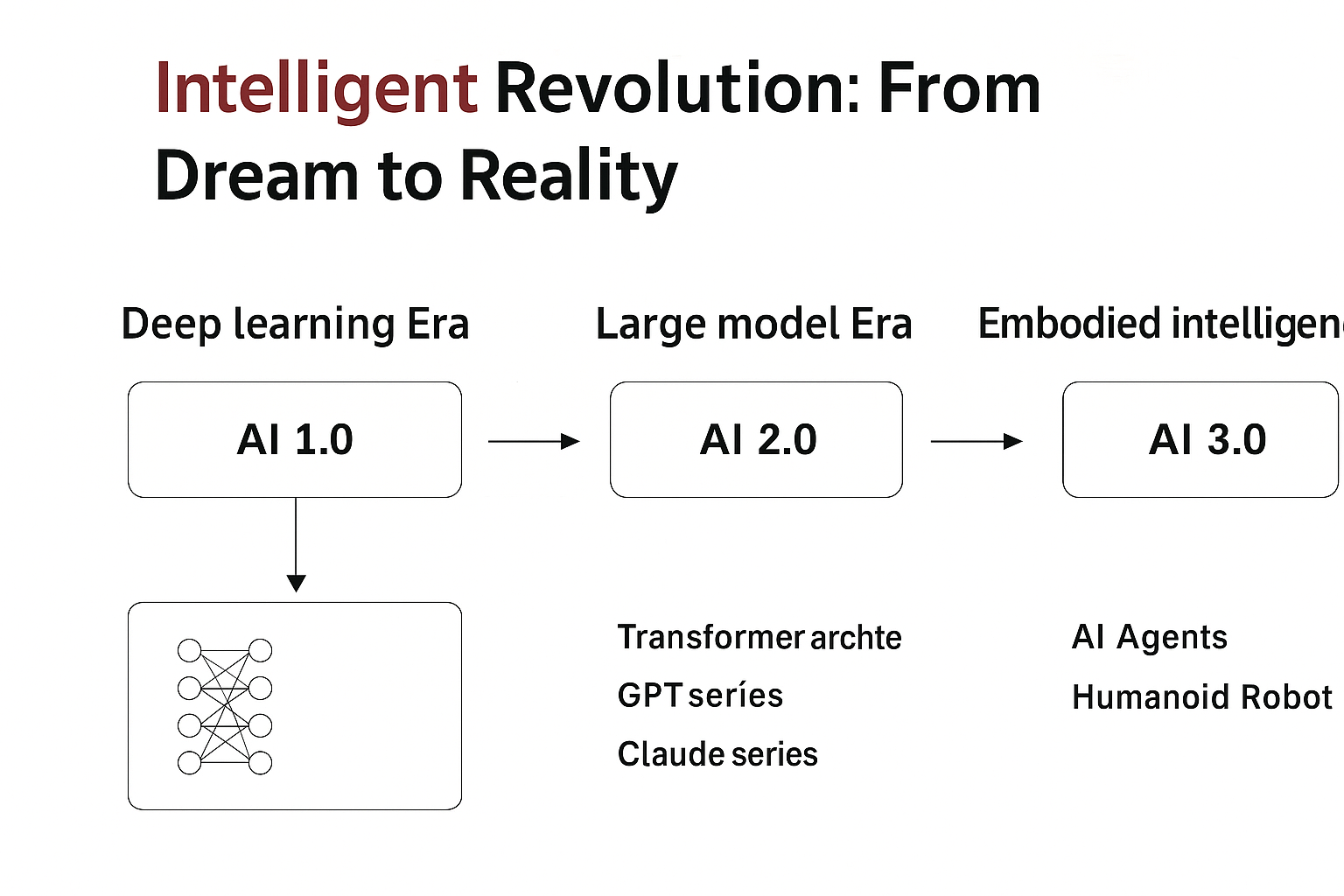
We are now in the third stage, and as developers, we should keep a close eye on the evolution of AI 3.0 technology, especially in the following two major directions:
What to Keep an Eye On
While I was away studying at a language school, the development of AI didn't stop for a moment. The following two technologies have rapidly gained prominence during this time and are worth a deep dive:
MCP (Model Context Protocol)
MCP is an open standard protocol proposed by Anthropic. It aims to provide a unified interface for Large Language Models (LLMs), enabling them to connect and interact with various external systems and tools. It's like the USB-C port for AI applications: a secure, standardized way for AI models to access external data and tools, further expanding their capabilities and application scenarios.
For example:
- Performing code reviews based on a company's coding standards
- Checking documents or contracts against company documentation guidelines
AI Agent
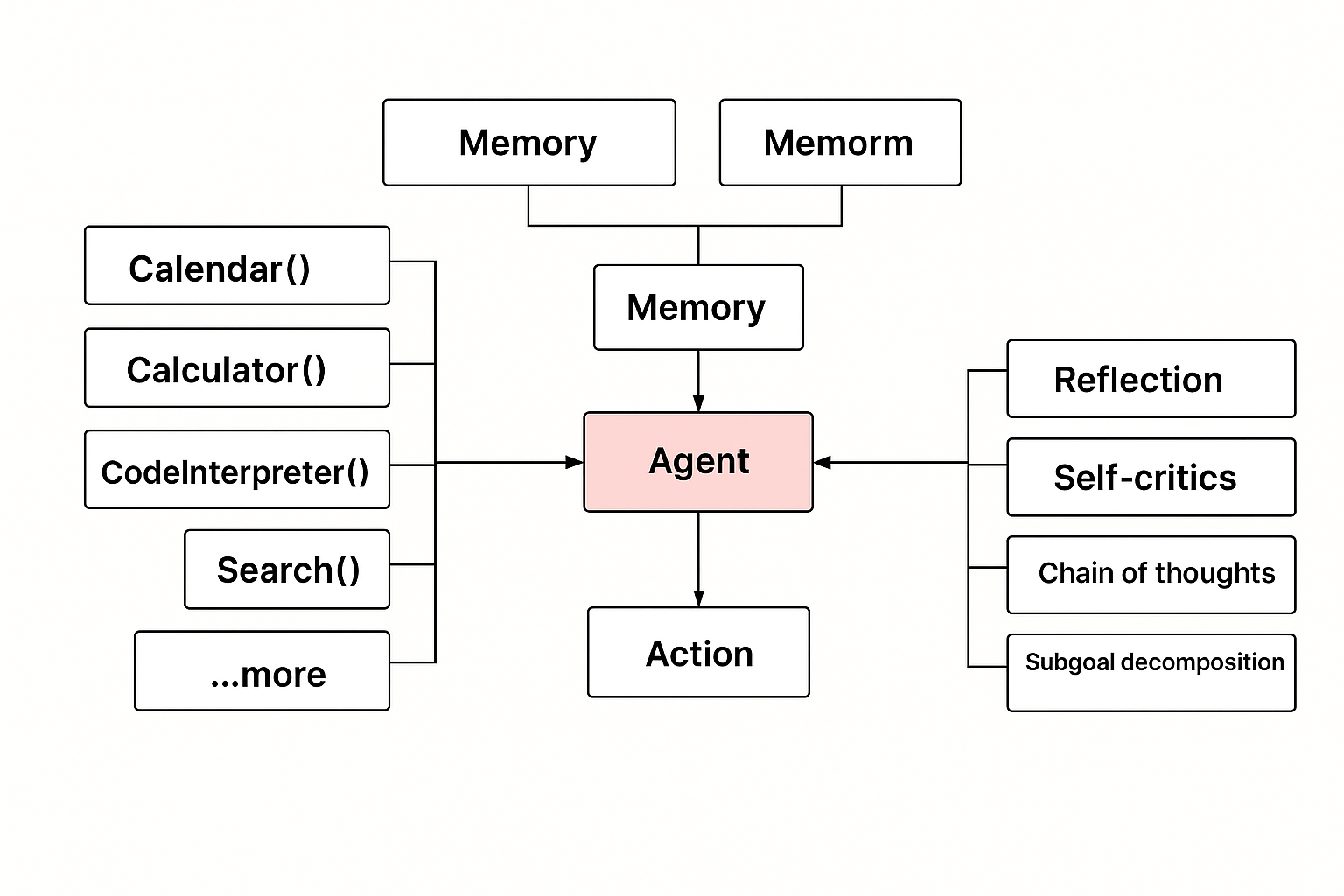
An AI Agent is an intelligent system that combines Large Language Models with the ability to operate tools. It doesn't just respond to user input; it can understand tasks, plan steps, execute them autonomously, and even has memory and learning capabilities. I believe that in the future, AI Agents will gradually begin to observe their environment and become goal-oriented AIs with the ability to act, proactively completing tasks rather than just passively responding.
My Starting Point: Playing with Open-Source Large Models on a 4070 Super
In 2024, I got my hands on an NVIDIA 4070 Super graphics card and started trying to run open-source large language models at home. Although this card is considered a mid-to-high-end consumer card, it's limited by its VRAM, meaning it can only run smaller, "stripped-down" models like the 7B (7 billion parameter) ones.
For instance:
- A 7B model can generally handle text generation.
- A 13B model is barely usable for writing code.
While this kind of graphics card is serviceable for running open-source models locally and offline, it's still a long way from being suitable for real commercial use or model training. The application of these consumer-grade cards is limited to small-scale scenarios, such as development testing, personal learning, and so on.
Noteworthy Open-Source Frameworks and Models
Agent Frameworks
- LangChain Agents
- N8N
- CrewAI
Open-Source Models
The Turning Point: The Arrival of the Personal AI Supercomputer
VRAM has always been an issue. That's why many people in mainland China are modding their graphics cards to increase memory. I think GPU companies are well aware that increasing VRAM on consumer cards could hurt sales of their high-end products. By creating a separate personal AI computer product line, they avoid their own products competing with each other.
And so, on March 22, 2025, NVIDIA announced a revolutionary product at its GTC conference: the personal AI supercomputer, DGX Spark.
This device is equipped with the GB10 superchip, co-developed by NVIDIA and MediaTek. It boasts 128GB of memory and is only about the size of an iPhone in length and width. Its eye-catching champagne gold finish is quite appealing. It's priced at approximately NT$130,000 and is already available for pre-order.
The launch of this machine is expected to break through the VRAM bottleneck of traditional consumer or workstation graphics cards. It can directly support large models, paving the way for the accelerated development of AI Agents.
The DGX Spark is somewhat similar to Apple's "Unified Memory Architecture," which allows for efficient memory sharing between different computing units. Although Apple's machines can also run larger models, the number of tokens they can generate in a response is still relatively low, limiting their practical flexibility.
The Future of Software Engineering: From Writing Code to Training AI Agents
When every company can deploy large language models in their own environment—not just for inference, but also for fine-tuning and training—the definition of a software engineer's job will change. In the past, software engineers primarily "maintained systems." In the future, their role will shift to "designing and managing AI agents," deeply integrating AI into various industries and completely transforming workflows and services.
AI agents, with large language models at their core, combine functionalities like task planning, tool operation, and memory systems. Currently, most AI agents are reactive, but in the future, they are likely to become more proactive, capable of autonomously handling problems, making decisions, and taking action.


Comments