Mark Ku's Blog

The Problem

One day on Google search, I noticed that several well-known domestic websites had strange descriptions like the one below.
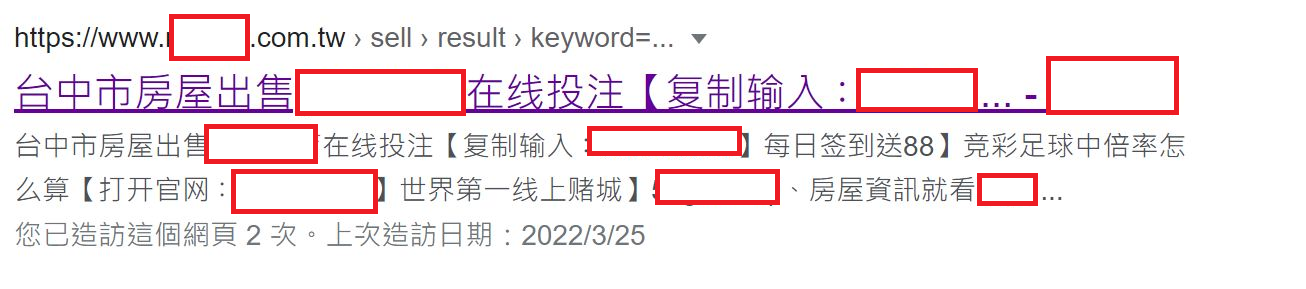
Google search result showing black hat SEO keyword stuffing

Curiosity got the better of me, so I opened the browser dev tools.

I checked the title and description in the page header used by search engines for indexing — they matched what Google had indexed.

HTML title and description showing black hat SEO keyword stuffing

Questions

From a web developer's perspective, all sorts of doubts came to mind.

Has the site been hacked?

Or were the admin credentials compromised?

Reproducing the Scenario

I tried tweaking the site's query string by appending "你好測試測試" (hello test test). Sure enough, the title and description in the header changed along with it.
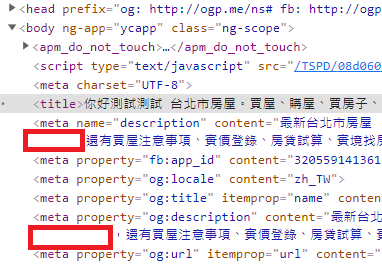
HTML head code showing keyword-stuffed title and description meta tags

Impact on the Website

According to this article, this is a backlink technique in SEO. When other sites link to yours, search engines treat it as an "endorsement". As your visibility grows and major media or forums increasingly cite your site, you accumulate endorsements from many different sources, and your site's authority climbs. The flip side is that if the linking sites are low-quality, your site's authority can take a hit too.

The Root Cause

After digging through plenty of references, I found that this technique is a form of black hat SEO known as keyword stuffing. Many websites, in their pursuit of better SEO, allow Google's crawler to index user search result pages. Black hat SEO exploits this built-in behavior by stuffing the URLs they want to promote into the query string. The site then adds those user-searched URLs to its sitemap.xml, and Google's crawler eventually picks them up into its search index.

After understanding the issue, I also reported it to those companies' fan pages and employees.

How to Prevent It

  • Filter out special keywords
  • Build an SEO whitelist/blacklist and a review mechanism
  • Don't let unsanitized data flow into the page header's title or description

Author

Mark Ku

擁有 10+ 年經驗的資深軟體工程師,現為 AI 應用 Builder,專注於大型平台架構與簡化複雜系統設計,從電商系統到訂閱與收費平台,結合 AI Agent、AI 整合與自動化開發,打造高效率且可持續演進的產品技術基礎。Read More

Found this useful?

The author's free tools, daily podcasts and newsletter are all here.

Mark Ku · This article is licensed under CC BY 4.0. Credit the author and link back to the original when reusing it.

Comments

Subscribe to Newsletter

Subscribe to get new posts delivered instantly — never miss a tech share.

By submitting, you agree to receive emails. You can anytime.

Popular Posts

View all
Mark Ku
··602

Oracle Cloud Always Free Tier: Linux Host and Static IP for a $0 Cloud Solution

Oracle Cloud Always Free Tier: Linux Host and Static IP for a $0 Cloud Solution
Mark Ku
··490

Say Goodbye to Postman's Fee Trap! A Hands-on Guide to Bruno, the Open-Source Git-Native API Testing Powerhouse.

Say Goodbye to Postman's Fee Trap! A Hands-on Guide to Bruno, the Open-Source Git-Native API Testing Powerhouse.
Mark Ku
··333

A Free, Open-Source, Notion-like Knowledge Base — A Complete Guide to Deploying and Backing Up Outline Wiki

A Free, Open-Source, Notion-like Knowledge Base — A Complete Guide to Deploying and Backing Up Outline Wiki
Mark Ku
··264

Training Your Own AI Voice: Hardware Requirements, Open-Source Model Comparison, and LoRA Fine-Tuning

Training Your Own AI Voice: Hardware Requirements, Open-Source Model Comparison, and LoRA Fine-Tuning
Mark Ku
··221

Building an Efficient API Management Platform: Deploying Kong Gateway from Scratch - Part 1

Building an Efficient API Management Platform: Deploying Kong Gateway from Scratch - Part 1
Mark Ku
··215

Setting Up Samba on Ubuntu to Share Folders with Windows 11

Setting Up Samba on Ubuntu to Share Folders with Windows 11