Mark Ku's Blog

The problem this solves

To verify whether a web server is sending the right requests, we typically reach for a packet-capture tool to see what the other side returned, or what extra requests the site is making. Since I only do this once in a while, I always forget the setup steps, so I figured I would write a note to refresh my memory.

Installation steps

Download and install

Free download link for Fiddler Classic

Tool > Options
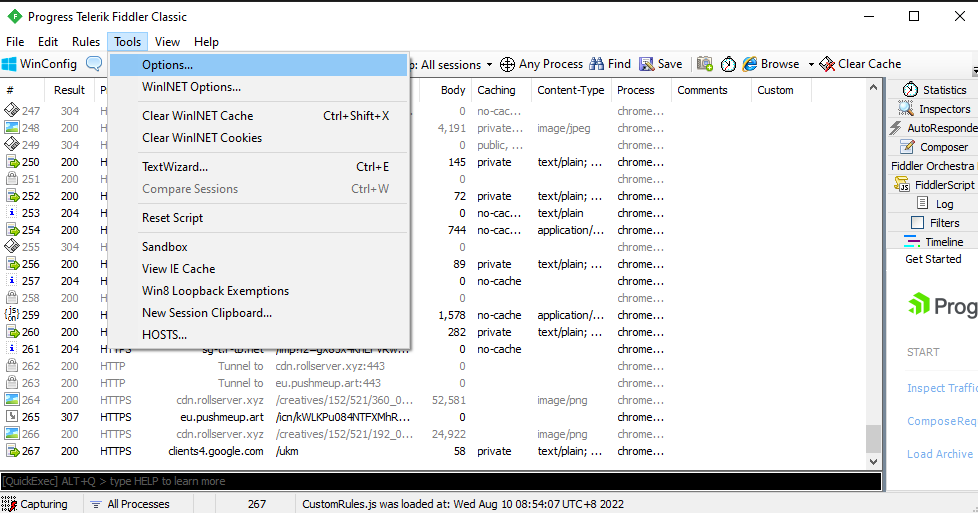
Fiddler Classic showing Tools menu with Options highlighted

Switch to the Https tab > Actions to install the certificate > OK
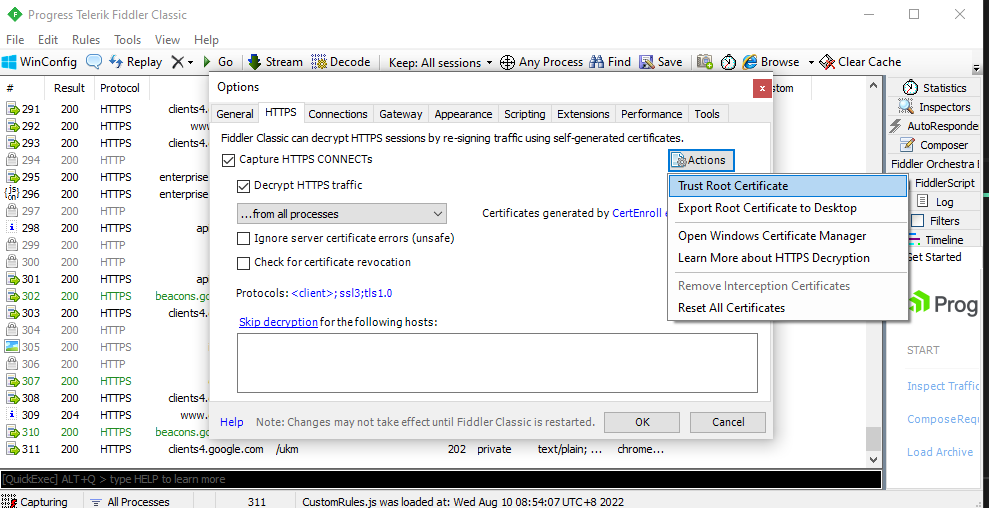
Fiddler Classic HTTPS options, Trust Root Certificate action highlighted

After configuring, close and restart Fiddler
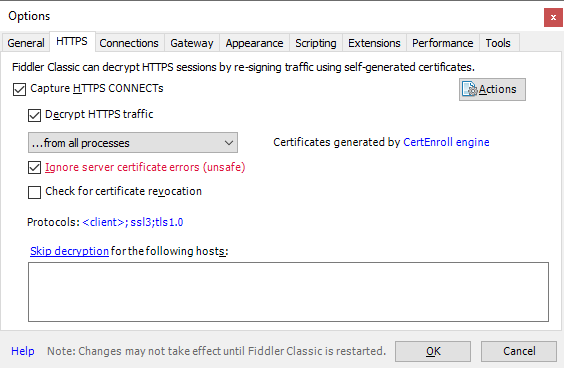
Fiddler Classic Options HTTPS tab showing traffic decryption and certificate set

You can drag and drop to monitor traffic generated by a specific application id
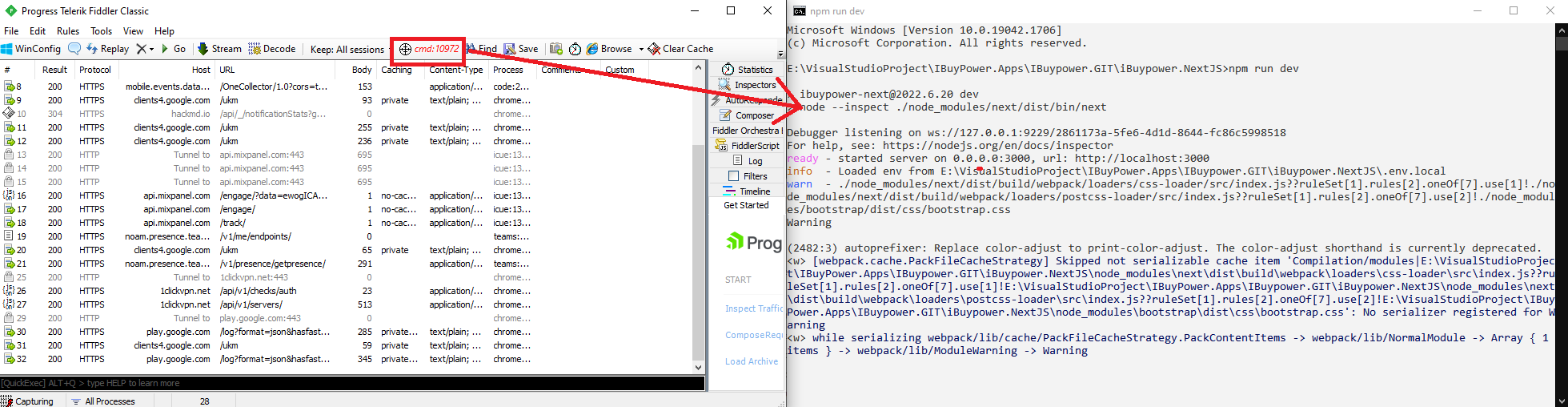
Fiddler Classic monitoring network requests from a command prompt application

If you know the source of the API, you can also locate it with Ctrl + F5
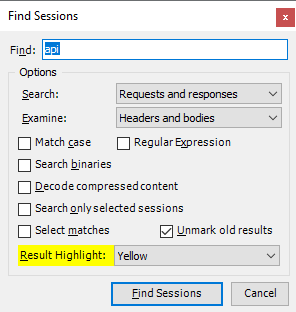
Fiddler Find Sessions dialog showing api search and highlight options

Search results

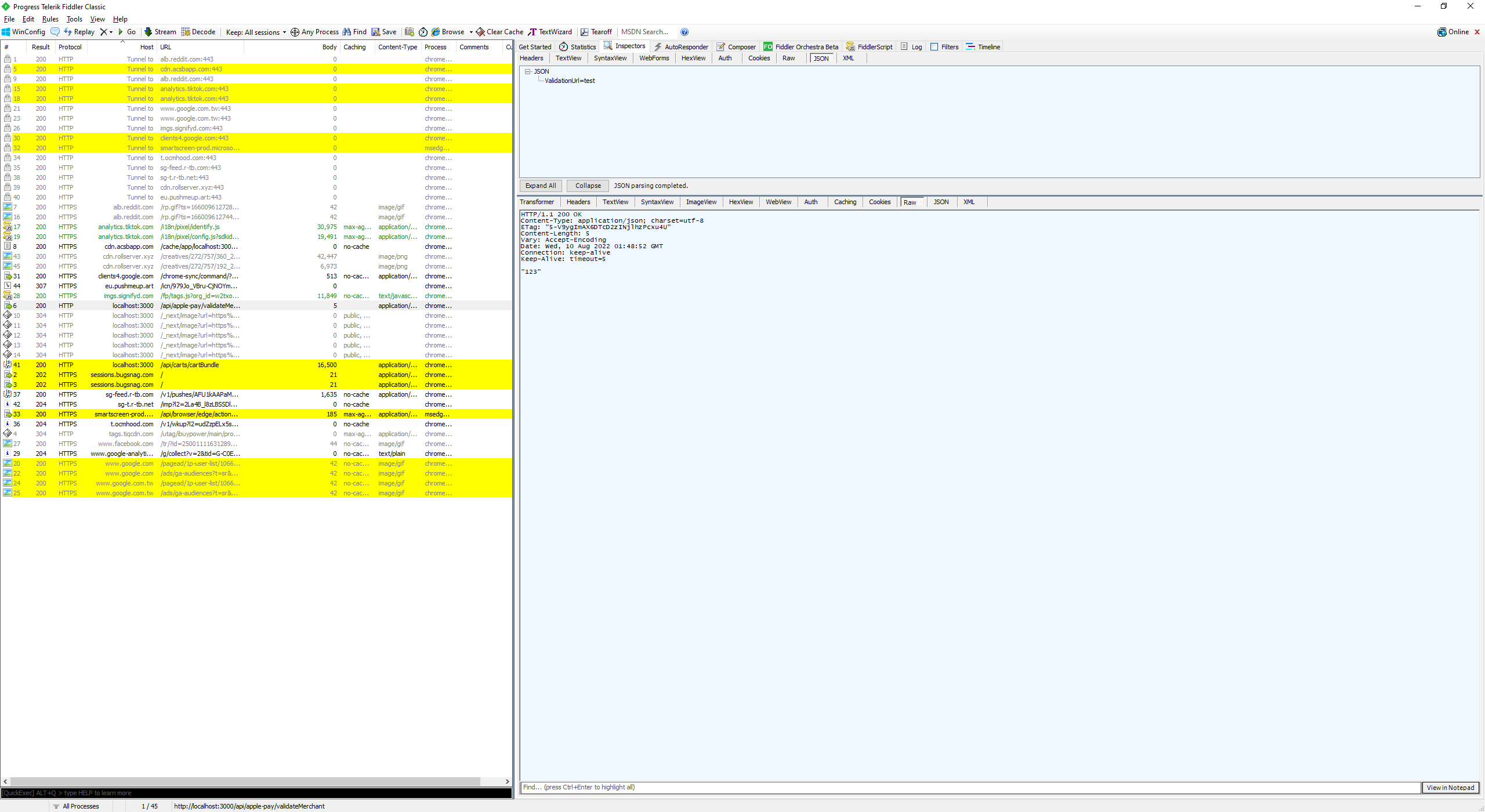
Fiddler Classic interface displaying web server network traffic and JSON respons

Notes

HTTPS does not let you capture the request body. For local testing, switch to HTTP. This version seems to have a few bugs - only "all processes" mode actually captures data.

Author

Mark Ku

擁有 10+ 年經驗的資深軟體工程師,現為 AI 應用 Builder,專注於大型平台架構與簡化複雜系統設計,從電商系統到訂閱與收費平台,結合 AI Agent、AI 整合與自動化開發,打造高效率且可持續演進的產品技術基礎。Read More

Found this useful?

The author's free tools, daily podcasts and newsletter are all here.

Mark Ku · This article is licensed under CC BY 4.0. Credit the author and link back to the original when reusing it.

Comments

Subscribe to Newsletter

Subscribe to get new posts delivered instantly — never miss a tech share.

By submitting, you agree to receive emails. You can anytime.

Popular Posts

View all
Mark Ku
··602

Oracle Cloud Always Free Tier: Linux Host and Static IP for a $0 Cloud Solution

Oracle Cloud Always Free Tier: Linux Host and Static IP for a $0 Cloud Solution
Mark Ku
··490

Say Goodbye to Postman's Fee Trap! A Hands-on Guide to Bruno, the Open-Source Git-Native API Testing Powerhouse.

Say Goodbye to Postman's Fee Trap! A Hands-on Guide to Bruno, the Open-Source Git-Native API Testing Powerhouse.
Mark Ku
··333

A Free, Open-Source, Notion-like Knowledge Base — A Complete Guide to Deploying and Backing Up Outline Wiki

A Free, Open-Source, Notion-like Knowledge Base — A Complete Guide to Deploying and Backing Up Outline Wiki
Mark Ku
··264

Training Your Own AI Voice: Hardware Requirements, Open-Source Model Comparison, and LoRA Fine-Tuning

Training Your Own AI Voice: Hardware Requirements, Open-Source Model Comparison, and LoRA Fine-Tuning
Mark Ku
··221

Building an Efficient API Management Platform: Deploying Kong Gateway from Scratch - Part 1

Building an Efficient API Management Platform: Deploying Kong Gateway from Scratch - Part 1
Mark Ku
··215

Setting Up Samba on Ubuntu to Share Folders with Windows 11

Setting Up Samba on Ubuntu to Share Folders with Windows 11