
Thoughts on English Education?
I once heard a joke: if people in Taiwan saved all the time they spent learning English, they could master another skill.
From childhood to adulthood, we spend nearly 10 years on English education, but the results don't seem to be very good. I think this is a sore spot for most of us. We lack an environment to actually use the language.
Is English Really Worth the Investment?
If I have to work until I'm 65 or even older, and if 2-3 months of intensive study can get me to a certain level where I can then continue learning on my own, then to me, this investment is well worth it. I'll be able to use this skill for the next 20-30 years.
My Background
I'm actually from the countryside. Before I started my career, I didn't understand why I should learn English or how to go about it. Besides for exams, what opportunities would I have to use it? I honestly didn't know the answers to these questions while growing up.
To put it half-jokingly, the chances of meeting a foreigner in my rural hometown were probably lower than getting hit by a rock.
I have 10 years of software development experience, having worked for companies in Taiwan, mainland China, Singapore, and the United States. My reading and writing skills are okay, but my listening and speaking are not great.
I've tried language centers like Global Village and even AI tutors, but they didn't really help me much because I wasn't using English in my daily life.
The Motivation
It all started with an interview 10 years ago. Before graduating from a training program at the Institute for Information Industry, I received an interview invitation from the American company UPS. Persuaded by a classmate, I went. I struggled through reading UPS's policies and giving a self-introduction in my broken English. I was lucky enough to get an offer, but due to a small hiccup, I didn't end up joining.
A few years ago, during a company meeting led by my former boss, he had to cover for me, and I once again dodged having to speak English.
Two years ago, I was sent on a last-minute business trip to the US. With the help of my colleagues, by piecing together single words and drawing flowcharts, I managed to complete the initial requirements gathering and bring the specifications back to Taiwan.
Subsequently, during meetings with American colleagues visiting Taiwan and with some external vendors, I found myself unable to contribute effectively. I always had to rely on sending summary emails after the meetings to confirm everything.
All these experiences made me realize the importance of English. I'll never forget that feeling of having something to say but being unable to express it.
In 2024, I finally acknowledged that my English problem was a 10-year-old issue I had merely been avoiding. The problem was still there.
A Necessary Realization
Learning a skill or a language isn't something you can achieve just by reading a book or spending a few hundred hours. You have to use it constantly. It's not something you can master in a short period; if it were, it probably wouldn't be that valuable to learn. Mastering a profession requires long-term accumulation, just like training for a triathlon. You wouldn't compete in an Ironman after just three months of training. If someone could, it's because they already had a very strong foundation.
Taking Action
Although my work in 2023 was hectic and chaotic, I made up my mind at the beginning of 2024 to finally master English.
I started with online, all-English tutoring from the Philippines (60 classes * 50 min).
At first, every all-English class was a struggle. It felt like I was listening to gibberish. I had to prepare for 1-2 hours before each session.
But after the 20th class, I found myself gradually able to use English more intuitively in my daily life, or even think in English.
In July 2024, after a German website project I was on went live successfully,
I used my annual leave and compensatory time off to attend a language school for two weeks. I also made many new friends and discovered a faster way to learn a language: simply using it. This planted the seed of attending a language school for a longer period.
Starting from the Basics: My Efforts
Because I have a full-time job, I have to use my spare time to study. I hadn't used English for many years, and my mind was often preoccupied with work, so my initial progress was slow and frustrating.
From ESL Level 2 > Level 3 I started by purchasing an online course from HiTutor (60 classes x 50 min). I spent a lot of time building my confidence and finally found a teacher who was willing to listen to what I had to say, gently correct me, and help me naturally express things I encountered in my life.
Then, I used my annual leave and compensatory time off to go to the Philippines for a two-week course at CBOA (8 days * 8 classes = 64 x 45 min).
During this period, I accumulated a total of 130 English classes.
ESL Level 4 At CBOA, I learned about the 11talk platform. To make my English learning more effective, I switched to 11talk (Pines' online platform) before heading to Pines.
ESL Level 4 ~ Level 6 I plan to spend 10 weeks at Pines Academy in Baguio, with the goal of advancing from Level 4 to Level 6.
Goals and Purpose for Learning English
-
Improve Cross-Cultural Communication Skills To be able to confidently communicate with people of different nationalities in both my work and personal life. I'm no longer afraid to talk to foreigners. For example, I've helped a few foreigners in the past few months, a breakthrough I couldn't have imagined before.
-
Expand My Mindset and Self-Exploration The English learning process often involves open-ended questions with no standard answers, which has made me think about topics my formal education never touched upon, such as:
- What's on your bucket list?
- If you had the chance, what new things would you try?
- How do you define success? These questions have helped me better understand my own goals and values.
-
Understand Different Cultures Through language learning, I've been able to gain a deeper understanding of the cultural backgrounds of other countries, thereby broadening my worldview.
-
Make New Friends After attending language school last year, I met many foreign friends, especially from Japan. We built precious friendships by communicating in English.
-
A Break and Reset from Work Due to work-related stress, I had neglected my health and ended up in the emergency room twice for high blood pressure. I'm using English learning as a part of my rest and mental adjustment, while also managing my health with medication.
-
Expand Career and Life Opportunities Improving my English ability can bring more opportunities in my career and open up new possibilities in life.
Why I Chose Pines Academy Language School
I went to CBOA Language School last year. The environment was fantastic and a lot of fun. In comparison, its sister school, Pines, has a less luxurious environment, but the overall study atmosphere in Baguio is generally better than in Cebu, which allows me to focus more on learning. The proportion of Chinese speakers is also lower. Since it's a sister school to CBOA, Pines also runs an online platform, 11talk. I tried one class and found the teachers and teaching system to be quite structured, so I ultimately chose Pines Academy.
Why I Chose Insensitive ESL
Based on my previous experience at CBOA, I didn't want to be in class all day, as that would leave no time for review and would actually be less effective. The most important thing for me is to be able to communicate and express myself smoothly, build a solid foundation, and strengthen my speaking and listening skills. As for things like a TOEIC score, I can work on practice tests on my own when I return to Taiwan.
Addendum - English Level Comparison Chart
CEFR stands for the Common European Framework of Reference for Languages. It is an international standard for assessing and describing language ability, applicable to learners of different languages. CEFR divides language proficiency into six main levels, from beginner to proficient user:
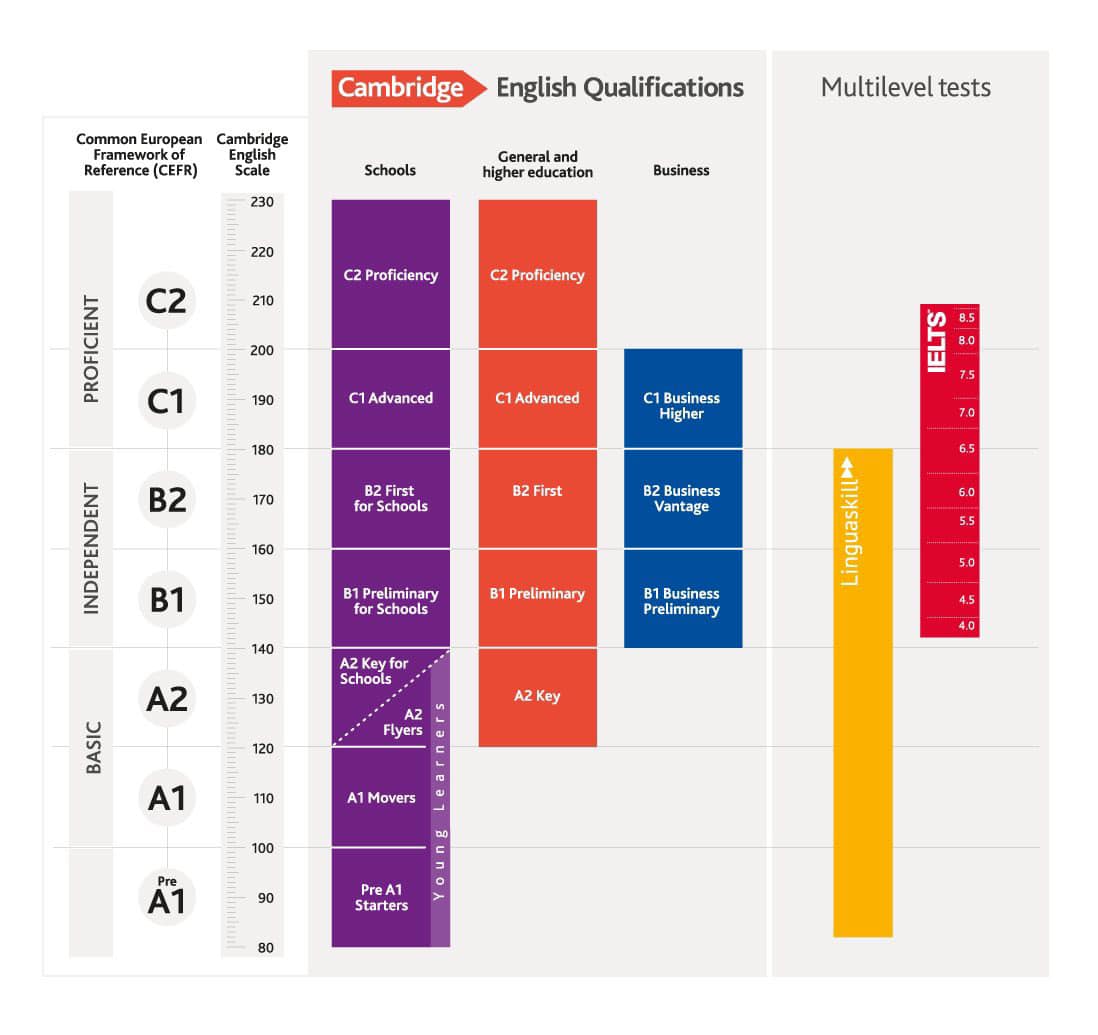
| CEFR Level | ESL Level | Description - | | C1 | 10 | Can understand a wide range of demanding, longer texts, and recognize implicit meaning. Can express ideas fluently and effectively in any social, academic, or professional setting. Can produce clear, well-structured, and logical explanations on complex subjects. | | B2 | 9 | Can participate in various conversations. Can read and understand complex texts, such as newspaper articles, magazines, or journals. Can understand others' viewpoints and express opinions on a specific issue, even engaging with native speakers with ease. | | | 8 | Can understand the main points of a conversation or discussion, as long as the topic is familiar or within their field of interest or profession. Can extract necessary information and ask questions for further debate, clarification, or explanation. Can write detailed content elaborating on a topic. | | B1 | 7 | Can explain in detail and with confidence a problem that arises in a specific situation and can propose how to handle it or offer suggestions. Can understand issues in situations of personal interest or expertise and respond appropriately to follow-up questions from others. | | | 6 | Can understand most ideas related to familiar matters and can handle most situations while traveling. Can describe experiences, events, dreams, hopes, and ambitions, and briefly explain opinions and plans. Can maintain social conversations on specific topics of personal interest. | | A2 | 5 | Can exchange opinions and feelings, express disagreement, and use simple expressions to compare people and things. Can interact with others using a variety of expressions in everyday situations in the community, workplace, and school. | | | 4 | Can provide simple directions for familiar, specific places. Can talk briefly about their neighborhood, school, and work using photos, maps, and a series of memorized expressions. Can use basic words to write invitations and other simple personal letters. | | A1 | 3 | Can ask and answer simple questions about familiar topics. Can make requests using basic phrases. Can talk about personal experiences as long as there are written prompts. | | | 2 | Can use a limited vocabulary and other expressions to understand short conversations on familiar topics such as hobbies, food, school, and work. | | | 1 | Can read and understand very simple instructions and written notices. Can ask and answer simple questions about time, date, and price. Can express themselves using memorized phrases and can grasp key points and follow basic instructions, provided that questions are communicated very slowly and clearly. | | Pre-A1 | 1P | Can use familiar everyday words, express memorized phrases and seasonal greetings. Can recognize simple written text and can reproduce the same text by copying. Can convey simple information about themselves, such as name, age, address, and country of origin. |


Comments