
Introduction
At the beginning of this year, we faced a significant challenge: the e-commerce shopping cart checkout flow had persistent issues — causing user complaints, occasional errors, and constant page refreshes.
While improving the checkout flow, we took the opportunity to refactor the codebase. The main goal was to re-architect over 4,000 lines of shopping cart code. I had only been working with React for about six months at the time and my knowledge was still limited. Despite that, my team and I successfully refactored the shopping cart page using React. I'd like to share how we approached the various problems and optimized the code along the way.
Challenges We Faced
Fixing Async State Issues
The original codebase didn't follow a single-source-of-truth pattern for state writes. When multiple objects tried to update state at the same time — or when state was shared between parent and child components — values would get overwritten or go out of sync, making component maintenance increasingly painful.
In the new cart, since cart state needs to span multiple component levels, we implemented a Redux-like state manager using React Context API + useReducer to handle shared state. All state writes are centralized through methods provided by the Context API.
This approach:
- Handles complex cross-component state.
- Eliminates the issue of async writes overwriting each other.
Calling the Backend API Before Async State Has Settled
React's setState is asynchronous. We solved this by chaining async return values through Promises using resolve, effectively converting async events into a sequential flow.
Eliminating Nested JS and Callback Hell
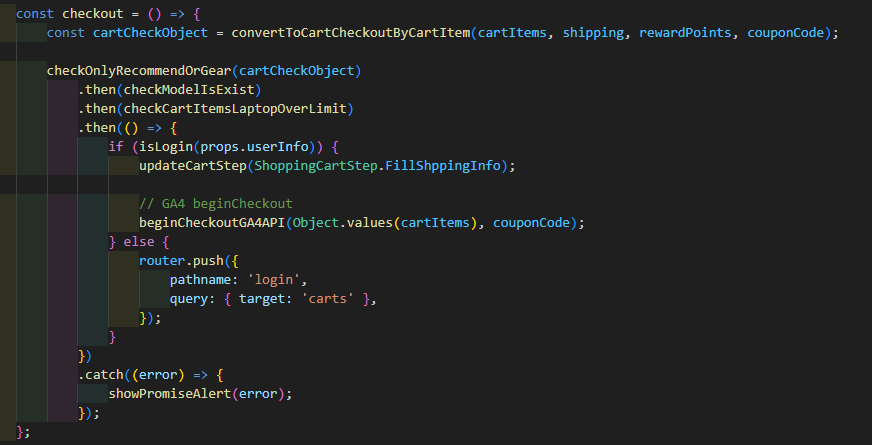
The original code was full of deeply nested structures and Callback Hell. To address this, we adopted ES6 Promises to simplify async code. We also applied early-return patterns to reduce nesting in conditional logic, making the code far easier to read and maintain.
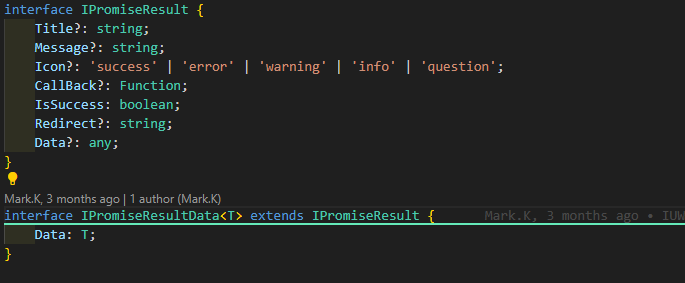
Defining a common Promise resolve type
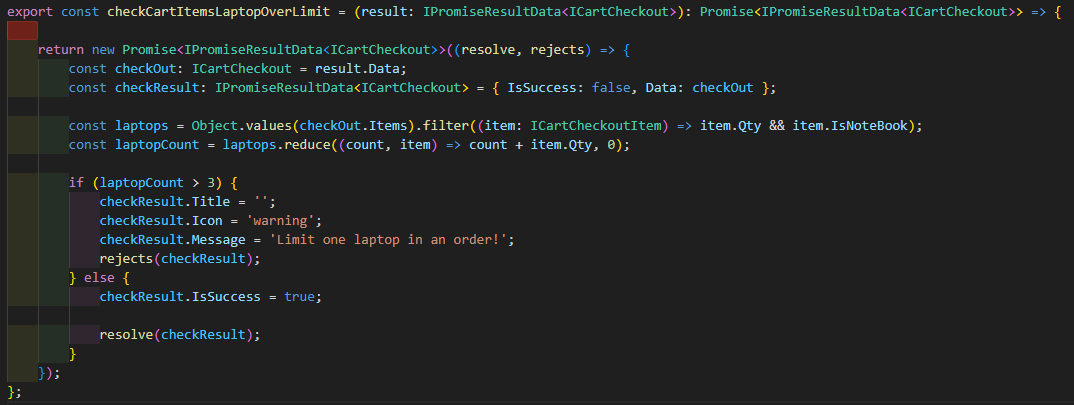
Breaking down async operations into individual Promises
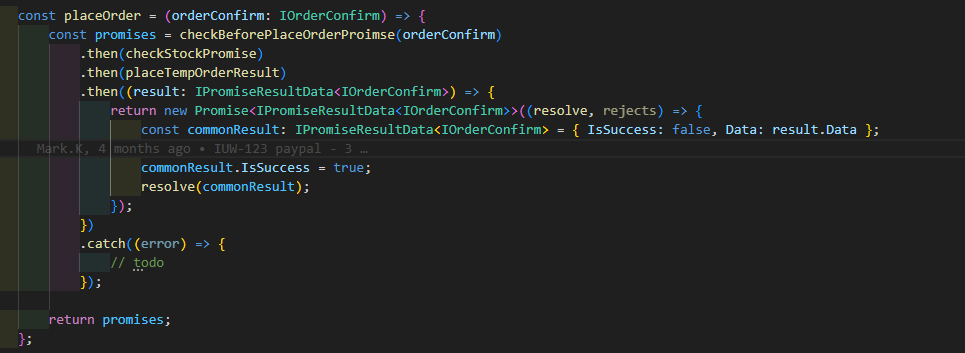
Chaining results with .then keeps the code clean and maintainable
Single Responsibility and Code Extraction
Many methods had identical logic duplicated in different places, leading to redundant and messy code. We applied the Single Responsibility Principle and gradually extracted shared logic into dedicated functions. This made the codebase cleaner and much easier to maintain and extend.
RWD Causing Style Chaos
With styled-components, supporting multiple device sizes often meant duplicating component CSS for minor differences — not a great experience to maintain. We introduced Tailwind CSS, which comes with a rich set of responsive selectors that make it easy to apply device-specific styles. It also made UI layout work significantly more efficient.
Componentizing Shared Elements
We noticed many repeated components and methods scattered across the codebase. We abstracted these into reusable units that could be shared anywhere. This reduced the total line count and improved development velocity. React's component-based model really shines here.
Issues Surfaced After Launch
After going live, new problems started appearing. Due to time and resource constraints, we had continued using the existing API — but since its flow was the inverse of what we expected, we discovered some erroneous orders post-launch.
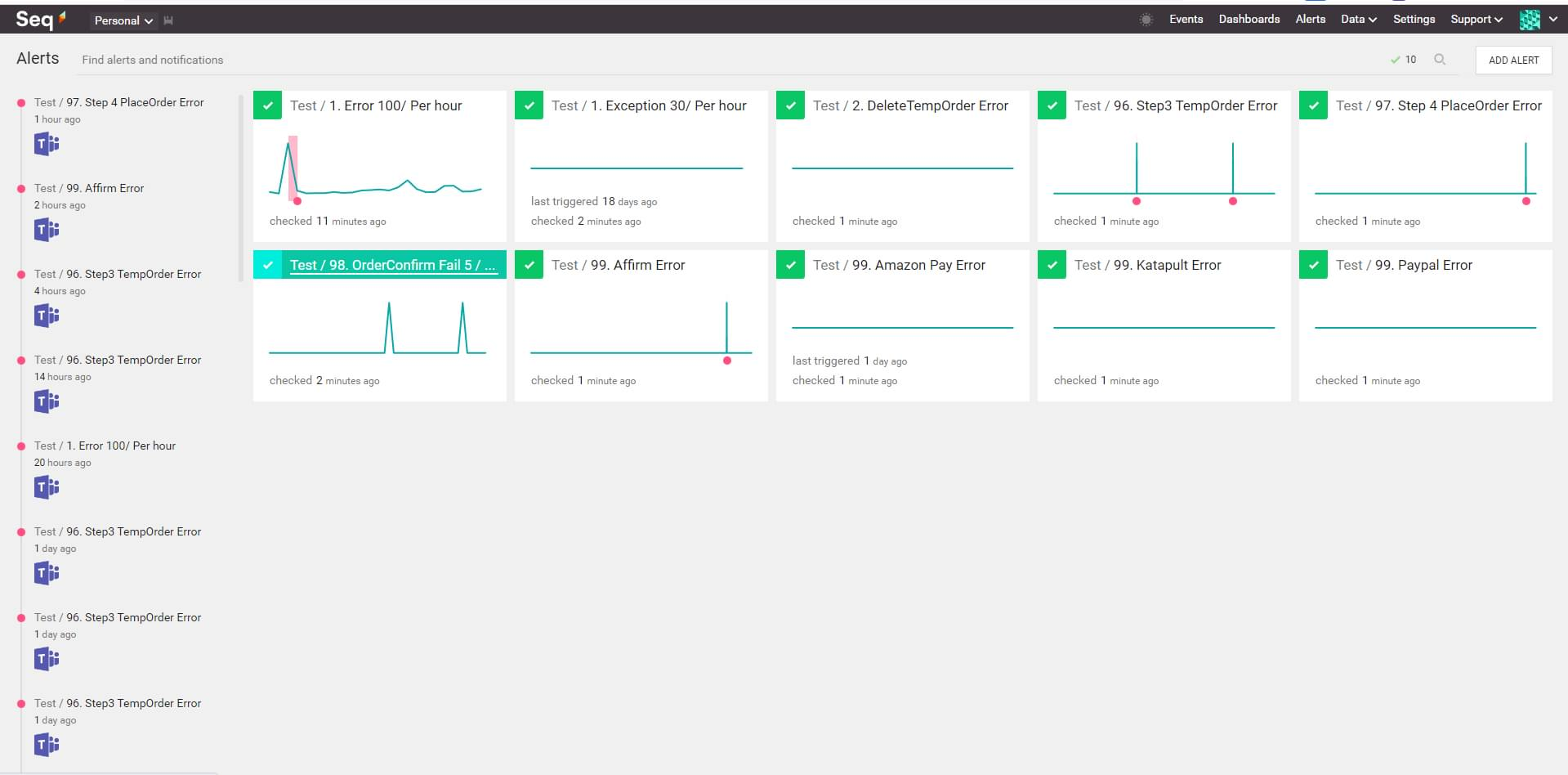
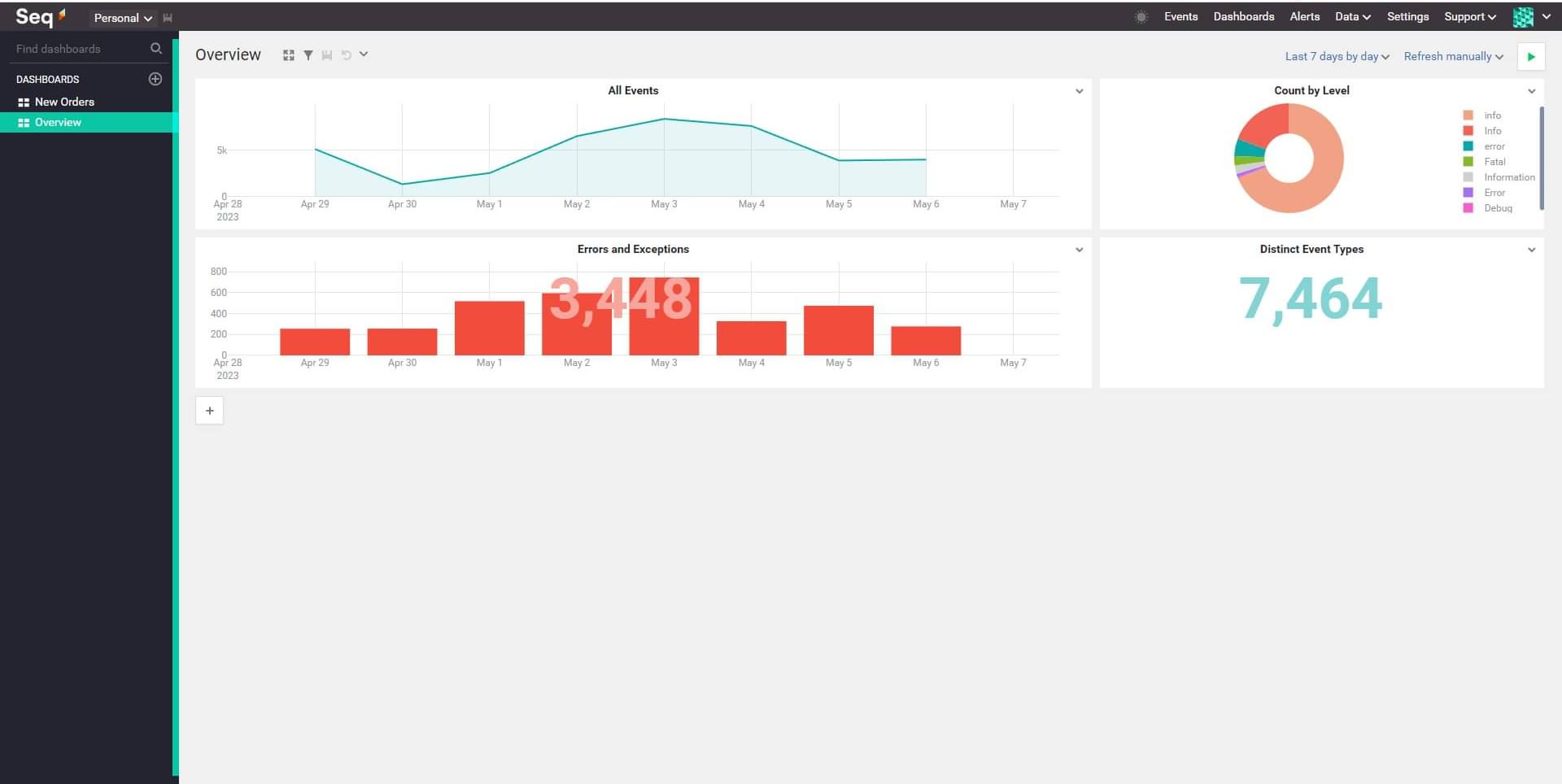
To address this, we added logging throughout the checkout and payment flows, and used Seq Alert to monitor error messages. Whenever an error occurred, we got notified immediately via Teams and fixed each issue one by one to eliminate bugs.
Reducing Google Maps API Usage
The original system had event listeners bound repeatedly. Every time a user entered a postal code, the system would call the Google Maps API multiple times, and events weren't properly cleaned up on unmount. This caused API call counts to spike. After fixing the double-binding and cleaning up event listeners on unmount, we significantly reduced our Google API costs.
Closing Thoughts
Through the steps above, we successfully refactored the shopping cart and resolved the issues we encountered. This half-year of learning and hands-on practice gave me a much deeper understanding of both React and software development in general. I'm looking forward to the next challenge and applying everything I've learned to new projects.
The key takeaway from this experience: even when facing an enormous challenge, there's always something to learn and grow from. We discovered how to apply new tools and techniques to solve real problems, and came out with a substantially better codebase.
If you're facing a similar challenge, I hope our experience is useful to you. Every challenge is an opportunity to learn. With enough persistence and determination, you can work through it and come out a stronger developer on the other side.


Comments