
Introduction
After returning to work, I gave an internal presentation at my company about my experiences with AI development.
Honestly, software development has been changing incredibly fast these past two years. So fast that sometimes it's not just about learning new technologies; it's about a complete shift in mindset. I'm still adapting to this wave myself.
Over the Lunar New Year holiday, I did some reading and observed the current industry trends, and I've started to get a feel for things. This post is a summary of my presentation, including projects our team actually built using Vibe Coding and some of my reflections on AI development.
From Developing Software Tools to Developing AI Workflows
What did we used to do? We built forms, created buttons, and designed user flows for "people" to use systems.
But the future might not look like that.
┌──────────────────────────────┬──────────────────────────────┐
│  The Old Way                 │  The New Way                 │
│  (SaaS Application)          │  (AI Agent Application)      │
├──────────────────────────────┼──────────────────────────────┤
│                              │                              │
│  🖥️ 依靠訂閱時長收費          │  🤖 依靠完成成果收費          │
│                              │                              │
│  📋 逐步操作表單與按鈕        │  🎯 描述目標與限制條件        │
│                              │                              │
│  🔧 開發工具給使用者 (Tool)   │  📦 交付結果給使用者          │
│                              │     (Result Deliverer)       │
│                              │                              │
└──────────────────────────────┴──────────────────────────────┘
💡 The future of software is no longer just about providing features to operate, but about delivering results to the user.
It's become incredibly easy to write code and build prototypes with AI. Things that used to take two weeks of discussion and three meetings can now be whipped up overnight. So, the value of software in the future might not be just "building features," but designing Agents and Workflows to let AI get the job done for you.
Our Team's Practical Results with Vibe Coding
In my presentation, I showcased several systems our team rapidly built using Vibe Coding. Each is a real-world example of turning an idea into a usable prototype in a short amount of time.
👉 We can turn business ideas into prototypes in a matter of "hours," not "weeks."
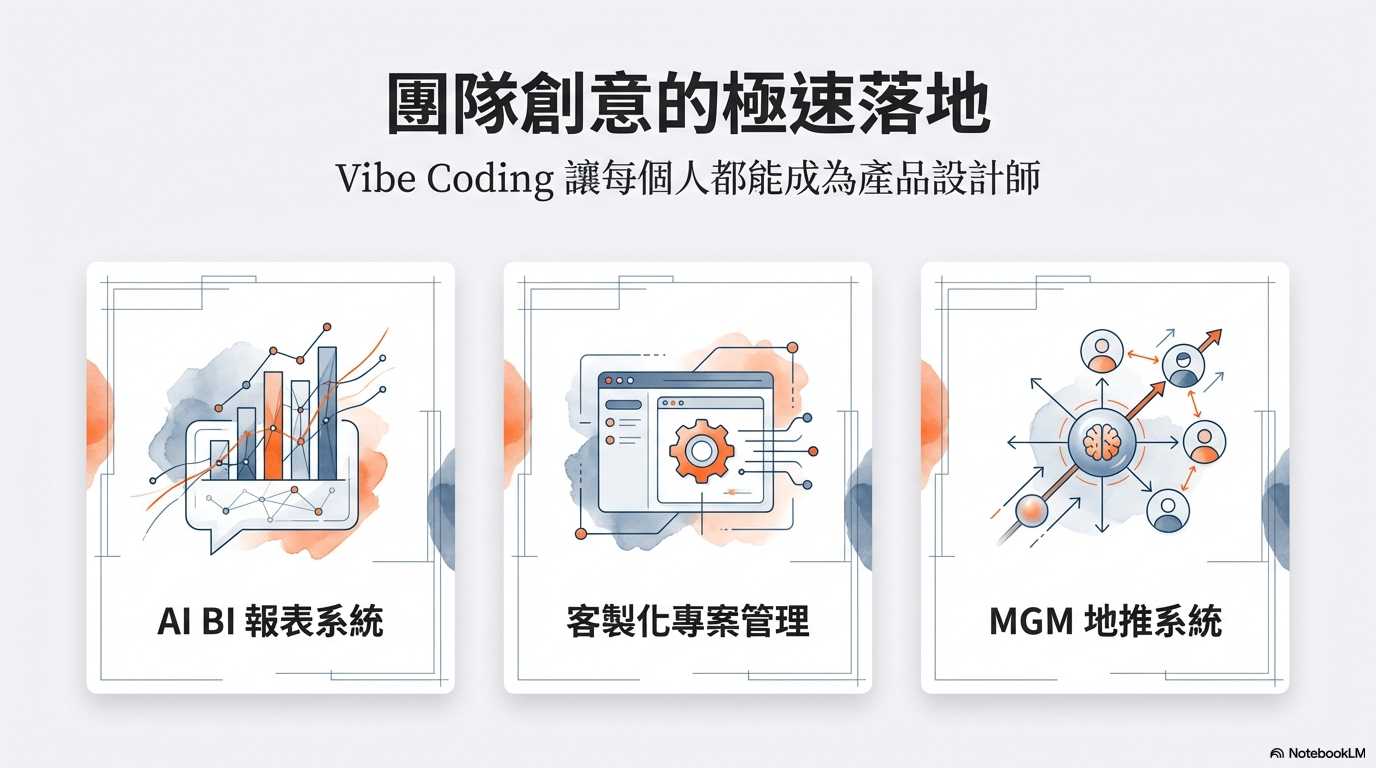
🤖 Case 1: An AI Reporting System with Natural Language Support
This was the one that impressed me the most — Ask, don't Query.
Previously, to see a report, a sales rep or PM would have to ask an engineer, "Can you pull last month's data for me?" and the engineer would then write SQL to fetch it. Now? They can just ask directly in natural language.
Mindset Shift: We originally thought this would require complex dashboard development, but it turned out we could achieve it simply by integrating with a large language model API.
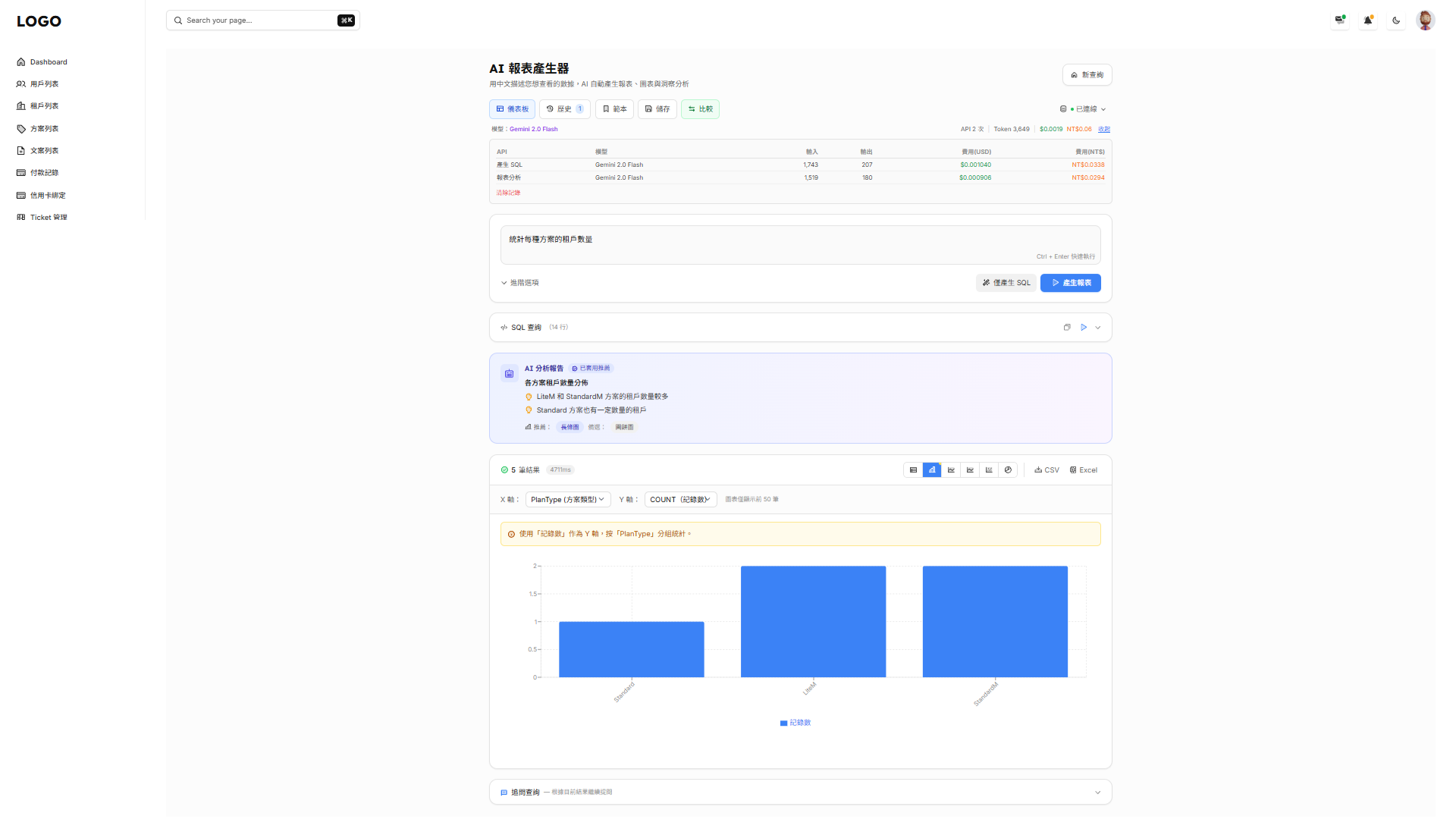
This system achieved the following:
- 🗣️ Directly query the database using natural language to get real-time statistical charts and analysis
- 📊 Automatically convert results into tables, bar charts, line charts, and pie charts
- 💰 Using Gemini 2.0 Flash, the monthly AI cost is less than 50 TWD
👉 Breaking old paradigms, allowing non-technical staff (sales, PMs) to work without waiting for engineers.
🎨 Case 2: Compliant Graphic Ad Generator
The marketing team often needs to generate ad copy and images that comply with regulations. Previously, marketing would write the content, legal would review it, and there would be a lot of back-and-forth revisions. The process was long.
Now, with AI, you can just input the product name and description to automatically generate compliant graphic ads:
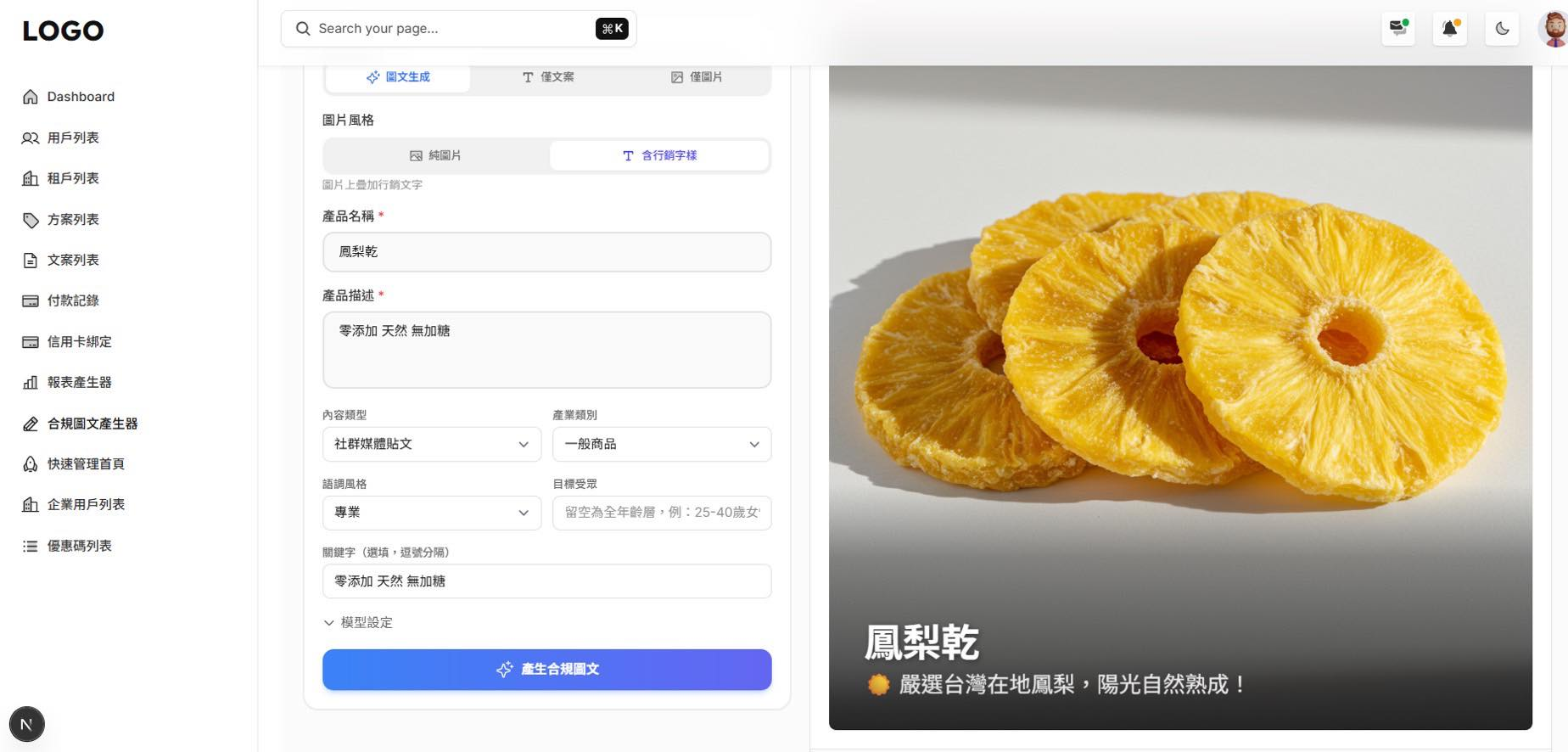
- Supports various content types (social media posts, ad copy, etc.)
- Allows selection of industry, tone of voice, and target audience
- One-click generation of compliant graphics and text, significantly shortening the marketing workflow
📋 Case 3: Custom Project Management Software Based on Azure DevOps
We used the Azure DevOps API combined with Vibe Coding to quickly build a user-friendly, custom Kanban board.
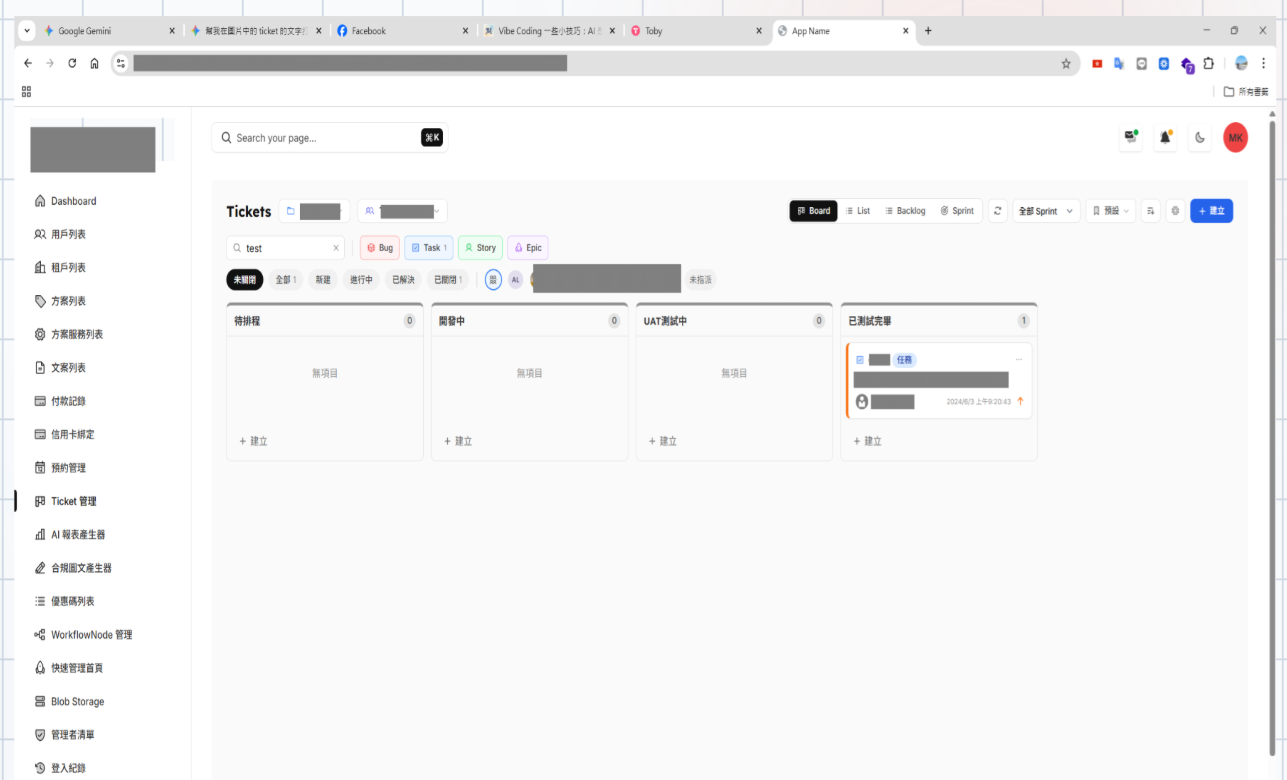
Why not just use Jira? Because:
| Comparison | Using Jira Directly | Building Our Own Board |
|---|---|---|
| Licensing Fees | 💸 Per user, per month | ✅ Significant savings |
| User Experience | Feature-rich but complex | ✅ Optimized for team needs |
| Customization | Limited | ✅ Complete freedom |
| Development Time | No development needed | ⚡ Completed quickly with Vibe Coding |
🎁 Case 4: MGM Member Promotion System
This system achieves efficient MGM (Member Get Member) rebates and settlements through unified member management and API integration.
Challenge: Member data was siloed across different platforms, making integration difficult. Solution: Implemented Single Sign-On (SSO), integrated social accounts, and had each product call the MGM API for core functionalities.
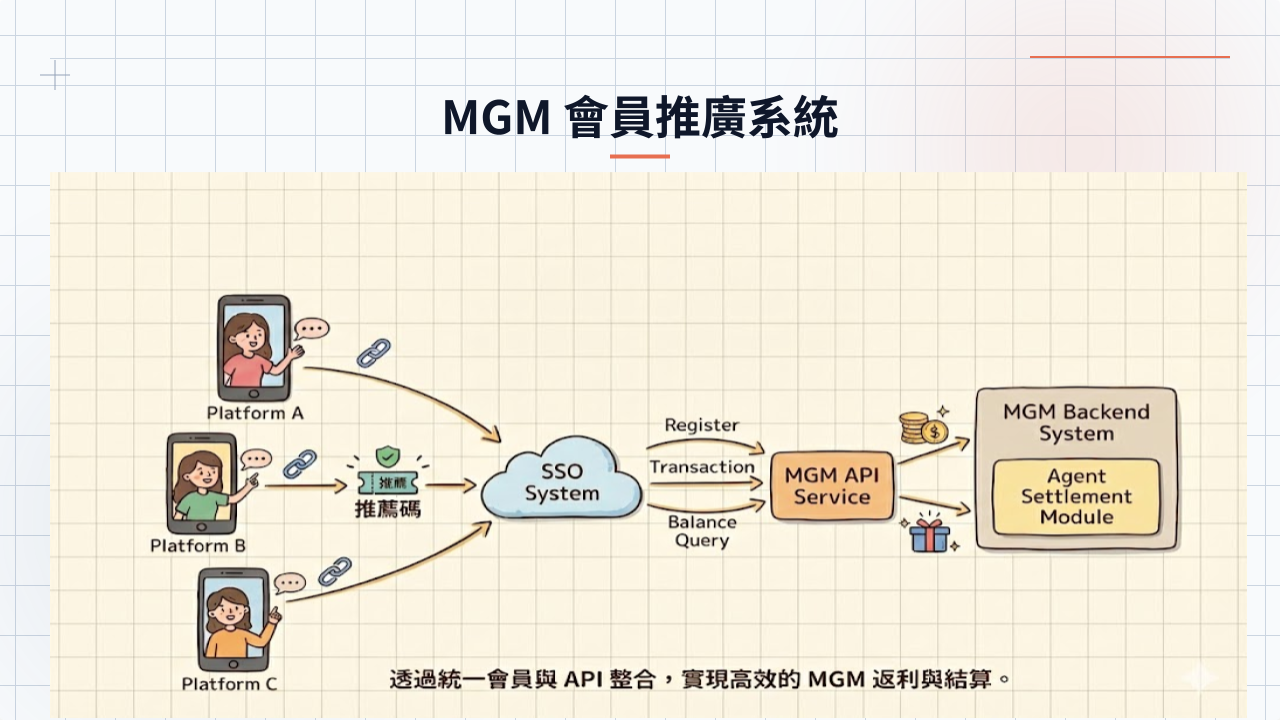
The admin panel was also rapidly generated using Vibe Coding, resulting in clear logic that is easy to maintain:
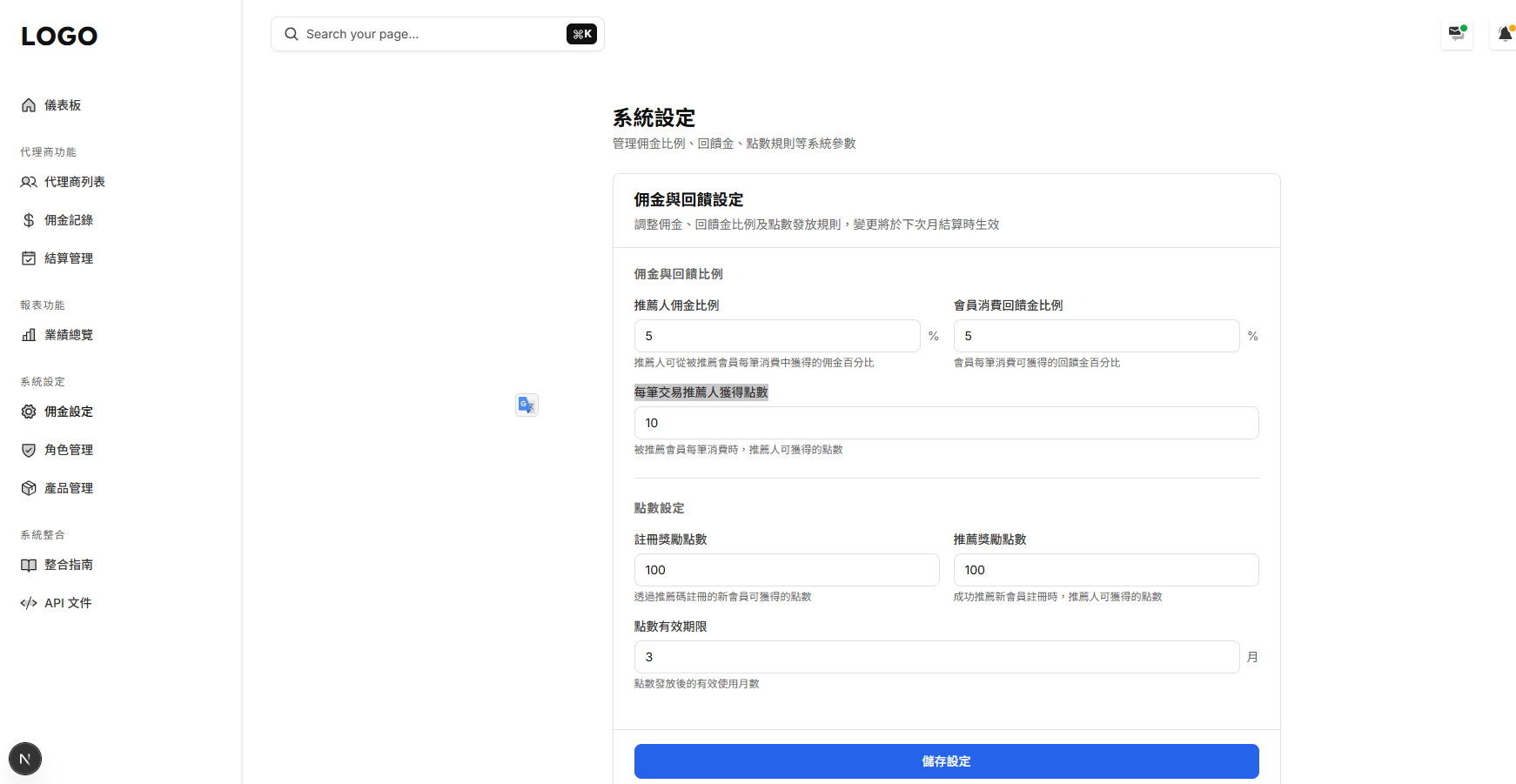
Features include:
- Manage commission distribution rates
- Set reward points for purchases and registrations
- Manage point expiration dates
We also provided a comprehensive product integration guide to allow other products to connect quickly:
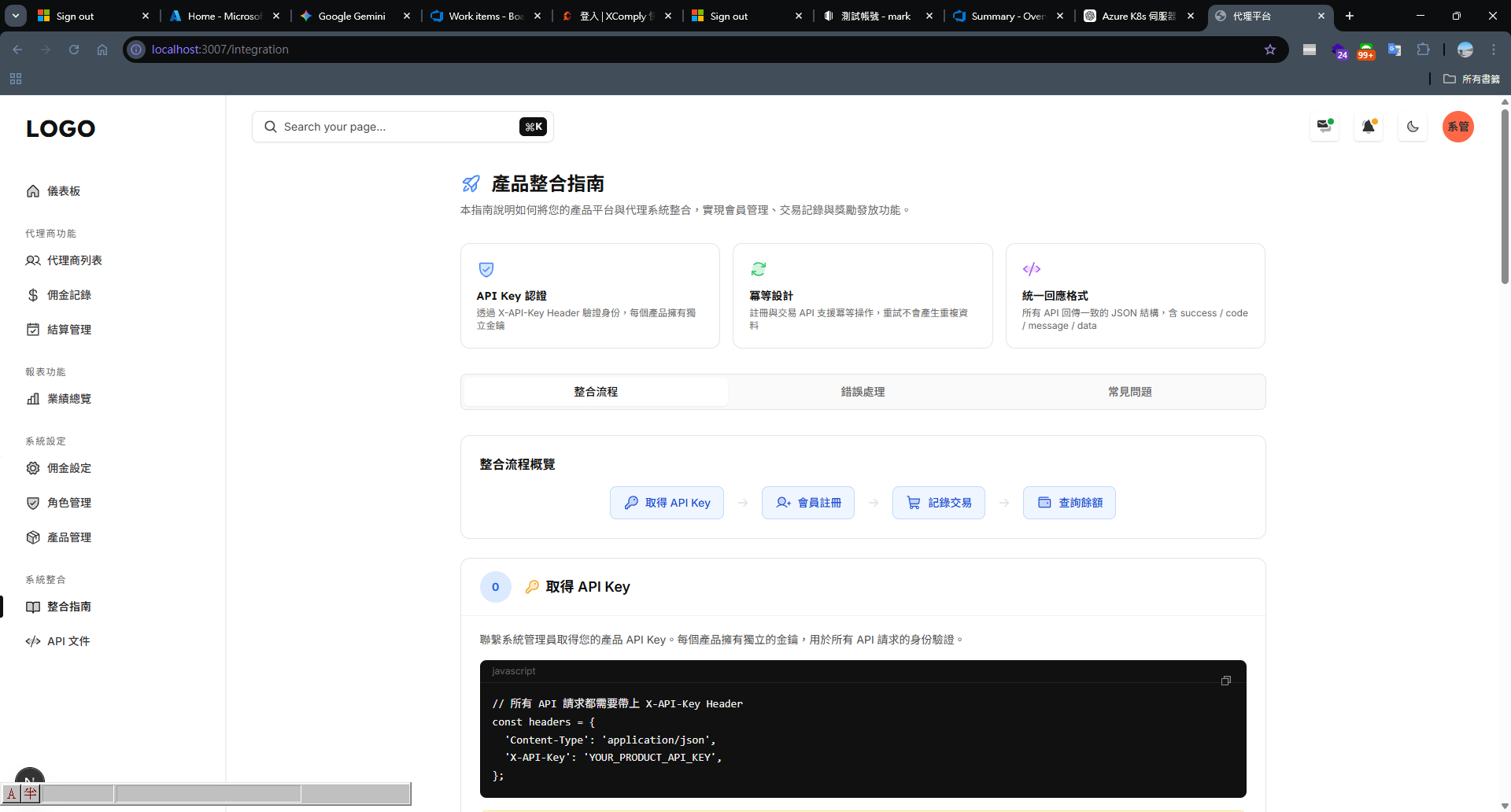
Non-technical Staff Can Also Develop the Backend
The cases above share a common theme — lowering the barrier to development. With Vibe Coding + AI assistance, non-technical staff can participate in backend development and adjustments, no longer having to wait for engineers for everything.
Tech Stack and Framework
These projects uniformly adopt Next.js as the full-stack development framework:
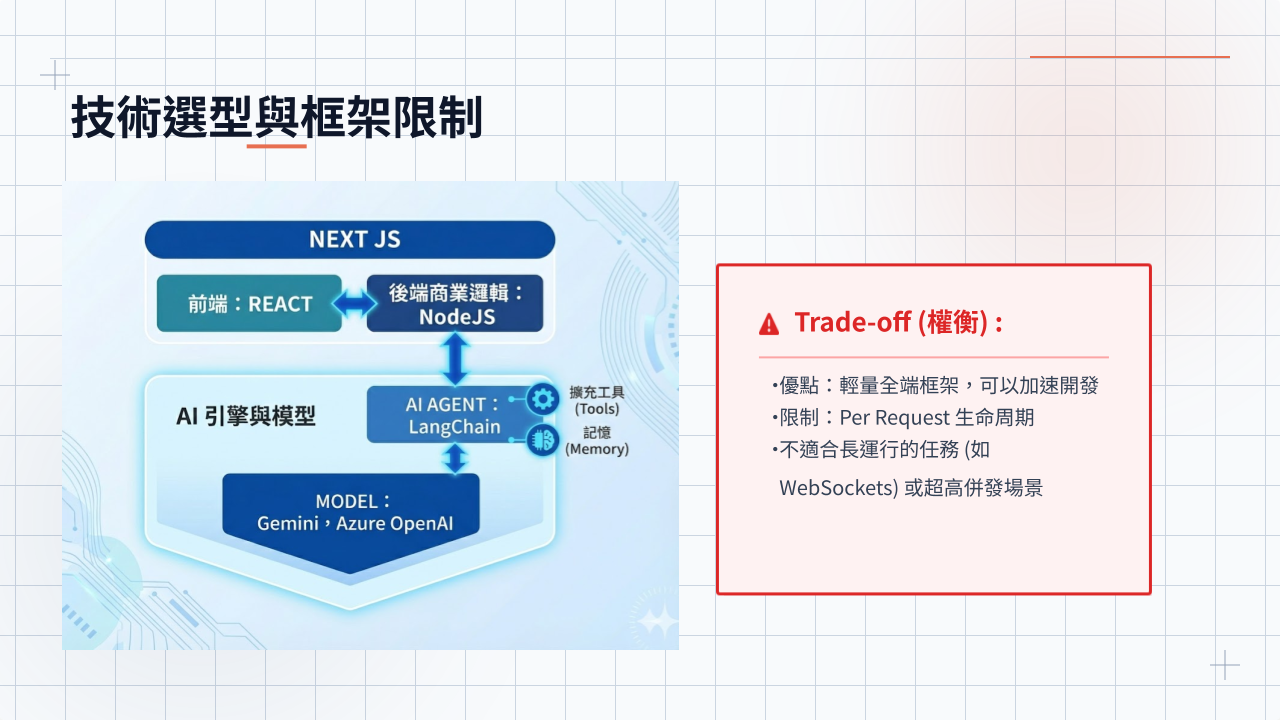
| Layer | Technology | Description |
|---|---|---|
| Frontend | Next.js (React) | Lightweight, for rapid UI development |
| Backend Logic | Node.js | Business logic processing |
| AI Engine | LangChain | Agent + Tools + Memory |
| Model | Gemini Vertex / Azure OpenAI | Flexibly switch between different models |
Trade-offs
- ✅ Pros: A lightweight full-stack framework that accelerates development
- ⚠️ Limitations: Next.js's per-request lifecycle
- ❌ Not suitable for: Heavy WebSockets or long-running tasks
- 💡 To speed up development, we also purchased a paid theme.
Where is Our Technical Moat?
When AI makes development easier and everyone can build products quickly, where does the real competitive advantage lie?
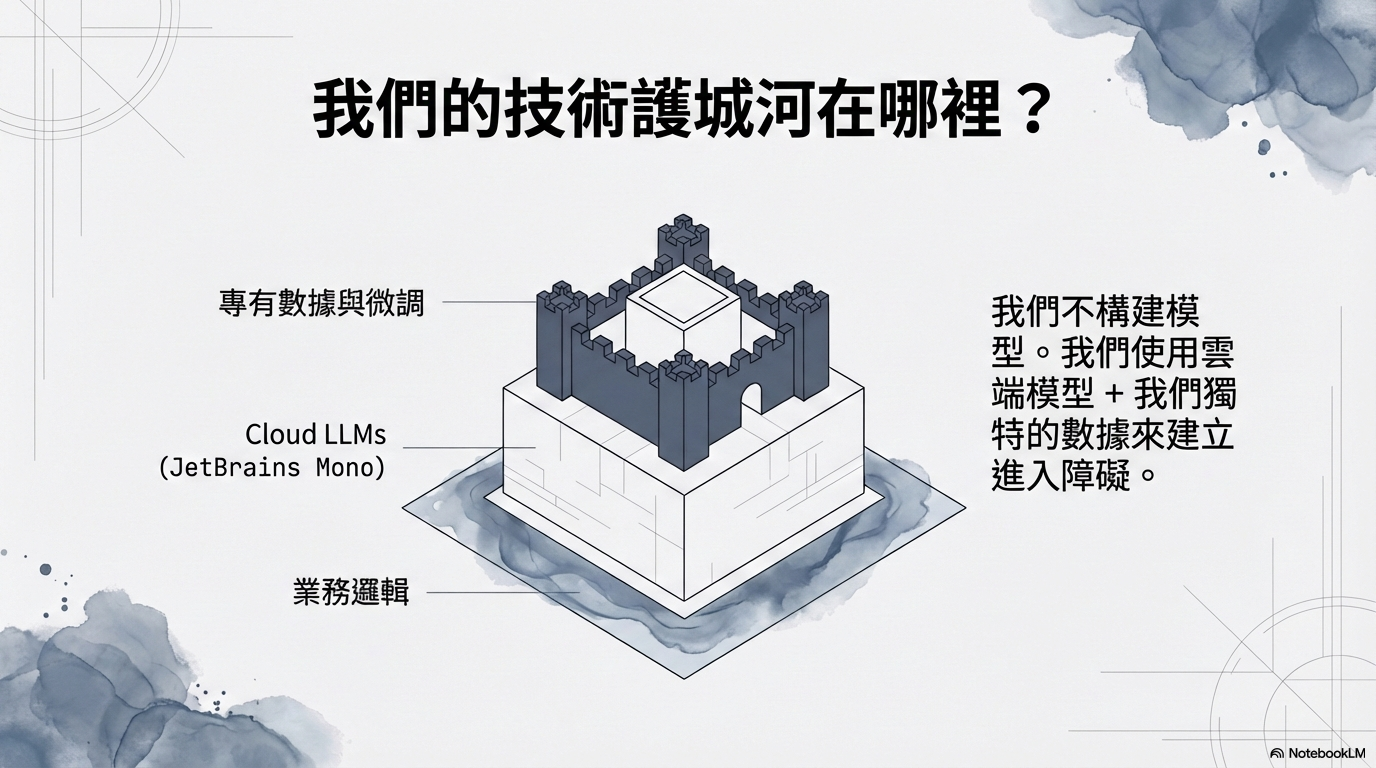
We don't build models. We use cloud models + our unique data to create barriers to entry:
- 🏰 Top Layer: Proprietary Data & Fine-tuning — Our industry data, compliance knowledge base, and business rules are things others can't replicate.
- 🌥️ Mid Layer: Cloud LLMs — Cloud models like Gemini and Azure OpenAI are available to everyone, but how you use them is key.
- 🏗️ Foundation: Business Logic — Years of accumulated domain knowledge and system integration experience. A deep understanding of the business is the bedrock.
💡 Anyone can use AI models, but proprietary data + business logic is the real moat.
Security Guidelines: How We Use AI with Confidence
AI is smart, but we can't trust it completely. The team established a Golden Rule:
🔒 No data write permissions. "Read-only, no modifications or deletions."
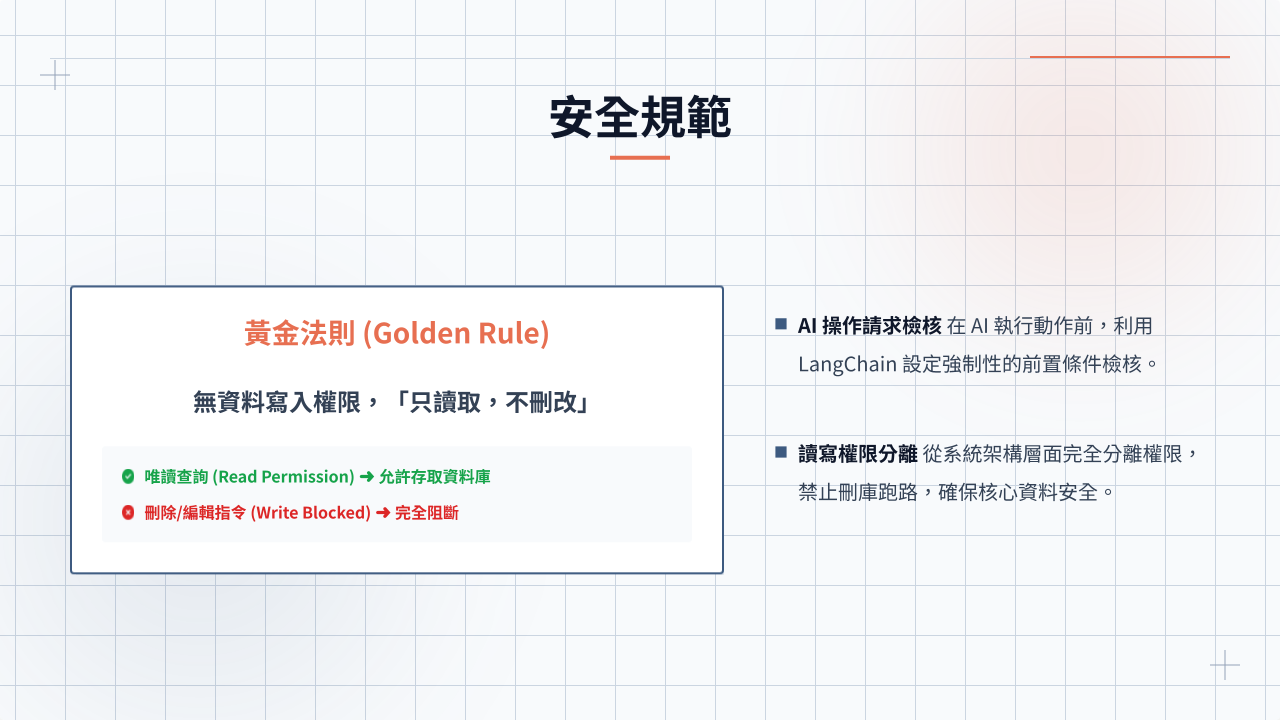
Two lines of defense:
- AI Action Request Validation — Before the AI executes an action, we use LangChain to set up mandatory pre-condition checks.
- Separation of Read/Write Permissions — Permissions are completely separated at the architectural level to prevent catastrophic actions like dropping databases and ensure core data security.
This principle is crucial — no matter how smart the AI is, it should never have the ability to destroy your data.
Engineering Professionalism in the Age of Vibe Coding
Now that I've covered the benefits, let's talk about the parts that worry me more.
⚠️ The biggest cost in software has always been maintenance, not development.
AI can generate 10x the code, but it can also create 10x the maintenance debt.
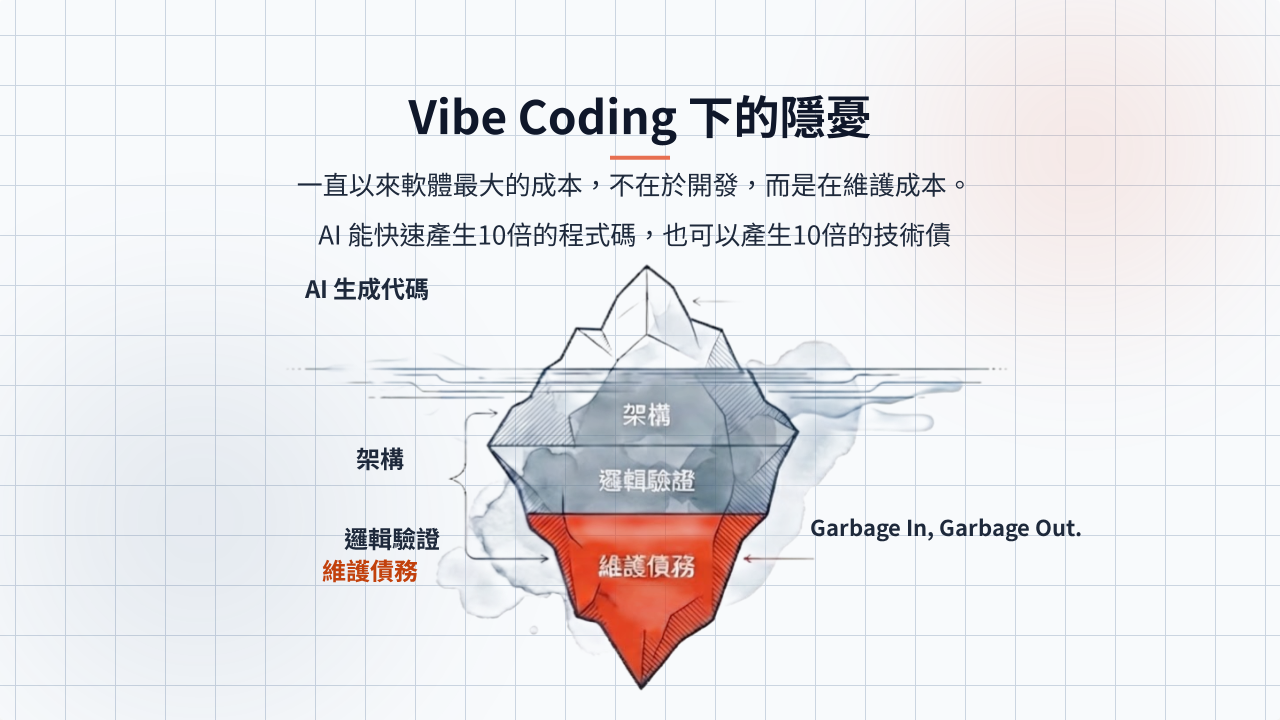
It's like an iceberg — the AI-generated code is the visible part above the water, but hidden beneath the surface are architectural design, logic validation, and maintenance debt. These are the factors that truly determine a project's success or failure.
👉 Garbage In, Garbage Out — The AI won't question your logic.
Speed ≠ Quality
| Aspect | Benefits from AI | Potential Concerns |
|---|---|---|
| Development Speed | ⚡ 10x faster | Technical debt could also be 10x greater |
| Code Volume | Rapidly produces large amounts of code | Lack of test coverage |
| Barrier to Entry | Non-technical staff can participate | Architectural design may lack a holistic view |
| Prototype Validation | Can be done in a day | The road from prototype to product is still long |
| Team Understanding | Reduces repetitive work | The team may not understand the AI-written code |
This wave isn't just about a simple efficiency boost; it's a test of how engineers can control quality, design architecture, and avoid being consumed by the speed.
To put it bluntly, the competition of the future might not be about "who codes the fastest," but about "who can master AI, rather than be mastered by it."
Conclusion
A few key takeaways I find important:
- From Developing Tools to Developing AI Workflows — The future of software is no longer just about providing features to operate, but about delivering results to the user.
- Vibe Coding Actually Works — Our team used it to build an AI reporting system, project management tools, and an MGM system, turning business ideas into prototypes in a matter of "hours."
- The Technical Moat is in Data and Business Logic — Anyone can use AI models, but proprietary data is the real competitive advantage.
- Don't Skimp on Security Guidelines — The Golden Rule: Read-only, no modifications or deletions. Even the smartest AI needs guardrails.
- The Most Expensive Part of Software is Maintenance, Not Development — AI can produce 10x the code, but it can also create 10x the technical debt.
This AI wave isn't going to stop. Everyone can build their own small tools. Anything is possible. 🚴
References
- Building a Natural Language BI Reporting System with AI Agents + LangChain — A detailed technical deep-dive into the AI reporting system
- Anthropic - Building effective agents — A reference for agent design
- The End of Programming as We Know It — O'Reilly's perspective on the future of programming


Comments