
Introduction
The more I use AI, the more I feel like it doesn't really understand what you're doing.
This isn't me being pessimistic, but an honest takeaway after getting my hands dirty with it for a while. When you give it a complex task, the quality of its output is capped by its limited context. It's fast and diligent, but it doesn't understand what you're doing.
In this post, I want to talk about three things: the nature of Multi-Agent systems, the hidden costs of Vibe Coding, and which skills are becoming more valuable in an era accelerated by AI.
Multi-Agent: Orchestrated Automation, Not Autonomous Driving
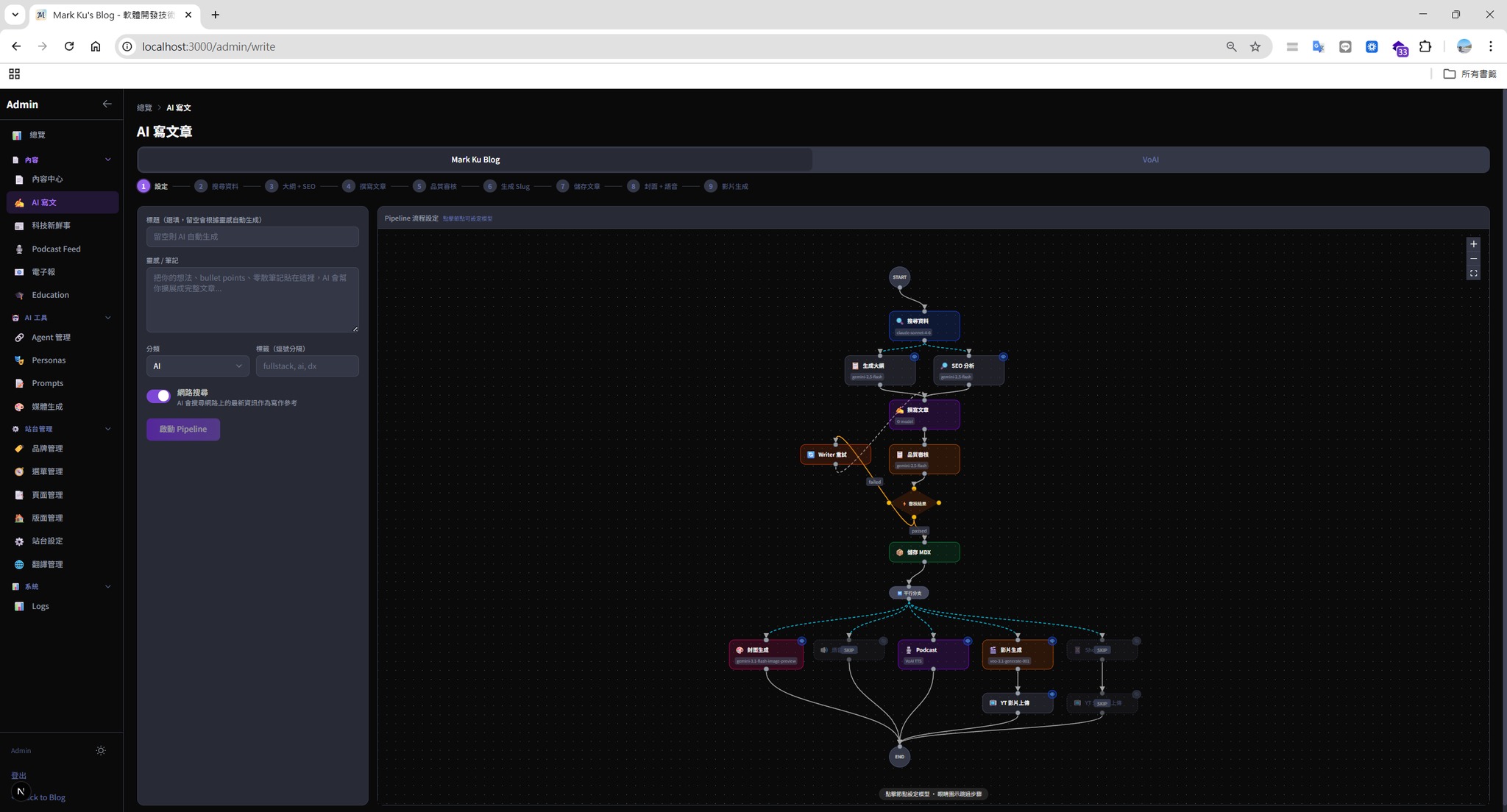
My own blog runs on a LangGraph Multi-Agent Pipeline that chains everything together, from research and writing to cover art, voiceovers, and video. After playing with it for a while, my conclusion is:
At its core, Multi-Agent is still "human-orchestrated automation." It adds logic to the call-and-response flow, allows for repeatable execution, and lets you use agents with different personas to help, but it's a long way from being fully autonomous.
A 2026 CIO magazine article directly stated that "true multi-agent collaboration isn't feasible," as agents will exhibit issues like:
-
🔄 Ignoring instructions, repeating work
-
📉 Delegation failures, planning paralysis
-
⚙️ Coordination overhead becoming a bottleneck itself
These problems are almost identical to management issues in human organizations. The bottleneck isn't the capability of a single model, but the complexity of coordination.
Vibe Coding: Accelerating Development, and Also Chaos
The concept of Vibe Coding is appealing: describe your needs in natural language, and the AI directly generates runnable code. But from my observation, this can create a host of problems:
📊 What the Data Says
Metric | Data |
|---|---|
Security vulnerability rate in AI-generated code | 53% (2.74 times higher than human-written code) |
Number of vulnerabilities found in vibe-coded applications | Over 2,000 vulnerabilities and 400+ exposed secrets in 5,600 applications |
Startup products needing partial or complete rewrites | ~8,000 companies, with an estimated cost of $0.4–4 billion |
Maintenance cost (Year 2) | 4 times that of traditional development |
Time developers spend per week fixing AI errors | 11 hours on average |
2026 has even been dubbed the "Year of Technical Debt."
🧨 Four Hidden Dangers of Vibe Coding
1. Digital Silos Everyone uses AI to quickly generate their own systems. Without a shared architectural language, these systems can't be integrated or reused, eventually becoming isolated islands.
2. Unmaintainable Code Most Vibe Coding projects hit a "Spaghetti Point" around the third month: new features break existing ones, and development velocity grinds to a halt. A deeper problem is the "accountability gap": when a bug is found six months later, no one can explain why the code was written that way, because no human actually made that decision.
3. Hard-to-Trace Logic AI-generated code might seem to work, but it lacks a coherent design intent. No one can answer "Why was this pattern chosen?" or "Why use this data structure?" because the answer is "The AI chose it."
4. Security Vulnerabilities AI models are trained on vast amounts of open-source code, which includes many vulnerabilities. The AI will naturally reproduce these issues. For users without a security mindset, they have no idea what they're deploying.
💡 The Most Easily Overlooked Fact
Many people mistakenly believe "With AI, everything can be accelerated." But the most time-consuming parts of software development have never been the act of writing code itself. They are:
-
Clarifying ambiguous and uncertain requirements
-
Managing system complexity
-
Long-term maintenance and evolution
AI currently offers little help with these tasks. Letting someone unfamiliar with the domain use AI to speed up development usually doesn't accelerate output; it accelerates chaos.
What is AI Truly Replacing?
In my experience, what AI can effectively replace right now are repetitive tasks, and the impact of that is already huge:
AI 擅長                          AI 不擅長
────────────────────────────────────────────────────
✅ 重複性的 CRUD 開發              ❌ 複雜系統的除錯與架構取捨
✅ 樣板程式碼生成                  ❌ 分散式系統的湧現行為判斷
✅ 文件翻譯、摘要、格式轉換        ❌ 對抗式安全思維
✅ 測試案例生成                    ❌ 跨團隊溝通與需求釐清
✅ 資料整理與分析                  ❌ 商業邏輯的取捨與妥協
A 2026 McKinsey report points out an interesting phenomenon: after AI coding assistants became widespread, the demand for software developers actually increased by 34%, but the job structure changed dramatically. Companies no longer need a 10-person team to write CRUD applications. Instead, they need 1-2 senior engineers to handle architectural design, review AI output, and manage the gray areas where AI can't make a judgment.
Conclusion: Execution is a Commodity, Judgment is the Moat
My feeling is that current AI isn't powerful enough to replace people, but at most, it can replace repetitive work. But even that alone is incredibly powerful and has already impacted many people's jobs.
Value is shifting:
-
Decreasing → The ability to write code and produce output quickly (Execution)
-
Increasing → The ability to clarify ambiguous requirements, manage complexity, and ensure maintainability (Judgment)
For engineers, the best investment right now isn't learning more AI tools, but strengthening the skills that AI can't replicate: architectural thinking, system design, requirements analysis, and a commitment to quality.
AI is a powerful co-pilot, but you still need to keep your hands on the steering wheel.


Comments